

INTRODUCTION
The perinatal period, spanning pregnancy to one year postpartum, is a vulnerable time marked by substantial social, psychological, and physiological stress1. Approximately 12% of perinatal women experience depression, and 13.7% report anxiety during pregnancy, with prevalence peaking in the first six months postpartum, particularly in high-income countries2. In Australia, depression affects one in ten pregnant women, a burden that has remained persistently high despite growing policy attention and increased screening activity, reflecting ongoing gaps in accessible mental healthcare within the perinatal period1. Anxiety, depression, and stress during pregnancy have both immediate and long-term consequences, including increased risk of preterm birth3 and greater healthcare utilization, contributing to national healthcare costs1. Longer term, perinatal mental health difficulties can disrupt maternal–infant bonding and negatively affect children’s emotional and overall development4. Antenatal and postnatal anxiety are significantly associated with internalizing and externalizing problems in children, underscoring the intergenerational burden of perinatal mental illness and the importance of early, effective intervention1,3.
Current approaches to supporting perinatal mental health are anchored in clinical guidelines that recommend universal screening followed by stepped psychological and pharmacological interventions for those identified as at risk1. However, pharmacological options are frequently avoided by pregnant and breastfeeding women due to concerns about fetal and infant safety, and many women express a strong preference for non-pharmacological approaches to managing perinatal distress5. In recent years, non-pharmacological approaches to supporting maternal mental health and wellbeing have become increasingly popular. Peer support is a potentially effective non-pharmacological prevention for perinatal depression6. Mindfulness-based interventions (MBIs) have also been recognized for their positive impact on mental health in pregnant women, functioning as psychological interventions5. Mindfulness training through smartphone applications has shown evidence of improving perinatal depression, particularly among those at risk7. Peer support specifically addresses social isolation and provides emotional validation, while mindfulness targets individual coping through regulation of attention and present-moment awareness6,7. Combining these approaches may offer synergistic and complementary benefits by targeting both social connection and individual coping processes8. Moreover, high attrition rates in standalone mindfulness programs may be mitigated by the added social accountability of peer support groups9. However, to date, no research has examined whether combining peer support with mindfulness applications can improve mental health outcomes during pregnancy. Furthermore, no single study has evaluated both the psychological and physiological effects of such a combined intervention in perinatal women. Such research is needed because psychological stress during pregnancy is associated with adverse maternal and fetal outcomes, including increased anxiety and depression and altered physiological stress regulation10.
Cortisol is a well-established and accessible indicator of physiological stress because it reflects activation of the hypothalamic–pituitary–adrenal (HPA) axis10,11. Therefore, salivary cortisol was included in the present study as an objective biomarker alongside validated psychometric measures. Combining objective biomarkers with validated self-report measures provides a more comprehensive assessment of intervention effects, as self-report tools alone may not fully capture the biological stress response12.
To our knowledge, no previous study has examined the feasibility of combining peer support with a smartphone-based mindfulness application in pregnant women. This quasi-experimental pre-post feasibility study aimed to evaluate: 1) recruitment and retention rates; 2) participant feedback on the intervention; and 3) preliminary changes in psychological outcomes (anxiety, depression, stress), mindfulness, perceived social support, and salivary cortisol.
METHODS
Study design and setting
This study used a non-randomized quasi-experimental pre-post design to evaluate the feasibility of a novel peer support intervention combined with a mindfulness application. The study was conducted at an antenatal clinic within a public hospital in New South Wales, Australia. As this was a feasibility study, no formal a priori sample size calculation was performed. The final sample size was determined by recruitment feasibility over the study period, consistent with the recommendation that a minimum of 12 participants represents a practical benchmark for pilot and feasibility research to estimate intervention parameters and inform future trial design13. The findings are intended to inform the design of future fully powered randomized controlled trials rather than to detect efficacy.
Participants and recruitments
A convenience sampling strategy was adopted, recruiting eligible pregnant women from the antenatal clinic across two sequential phases with different inclusion criteria, as described below.
Initial inclusion criteria targeted women identified as having a higher chance of experiencing anxiety and/or depression, defined as an EPDS score ≥10 or self-reported history of anxiety and/or depression at recruitment (Priority Population). Due to unexpectedly low enrolment despite multiple recruitment strategies, ethical approval was amended to expand recruitment to all pregnant women attending the antenatal clinic who did not screen positive on the Edinburgh Postnatal Depression Scale (EPDS <10) and did not self-report a prior history of anxiety or depression (General Population). This decision was made to assess the feasibility and acceptability of the intervention across a broader antenatal population and to generate sufficient data to inform future research design. Across both phases, participants were required to be less than 30 weeks’ gestation, aged ≥18 years, and able to read and understand English. Exclusion criteria included multiple pregnancy, pregnancy complications, requirement for specialist care, or complex mental health conditions, defined as current specialist mental health service involvement, psychotic disorder, active suicidal ideation under clinical management, or current inpatient psychiatric treatment.
Pregnant women were recruited from a public hospital in New South Wales, Australia, with two data collection points over a 10-month period. The first recruitment phase (April–September 2024) involved midwives identifying eligible participants during routine antenatal booking appointments using the EPDS; women scoring ≥10 or who reported a prior history of clinically diagnosed and/or treated anxiety or depression during the antenatal history-taking at the booking, were referred to the research team who provided study information and obtained written informed consent. Recruitment was also supported through posters in the antenatal clinic waiting room and social media (e.g. maternal Facebook groups) to reach women who self-reported a history of anxiety and/or depression.
Due to low enrolment, ethical approval was amended to include all pregnant women. During the second recruitment phase (October 2024–January 2025), the student researcher approached women in the clinic waiting room to introduce the study, with additional promotion via social media, posters, and flyers included in booking-in packs distributed by midwives.
Peer support group combined with a mindfulness application intervention
The intervention combined peer support groups with the Headspace mindfulness application, an evidence-based mental health tool providing practical guidance for integrating mindfulness into daily life during pregnancy. Peer groups aimed to foster mutual support while practicing mindfulness together, with a focus on coping strategies during pregnancy. Sessions followed a structured format developed from previous qualitative data findings collected via interviews with pregnant women who had shared similar experiences to inform the sessions (first phase of the study). The intervention was designed to encourage engagement through shared experiences, positive emotions, and idea exchange (Tables 1 and 2).
Table 1
Overview of structure of the peer support group combined with a mindfulness app
| Time (min) | Activities | Details |
|---|---|---|
| 5 | Welcome and introduction | Each session began with an acknowledgment of Country and a welcome to the group. The concept of a support group was introduced. |
| 15 | Warm-up activity (varies each week) | A brief round of introductions was conducted, giving each participant the opportunity to share their name and due date. The following are examples of activities that were used:
|
| 20 | Topic discussion and peer-to-peer support | Members were invited to share their experiences and to offer support and advice to one another. The facilitator shared topic questions with the group to encourage discussion and promote mutual peer support. The questions were relevant and aligned with the session topic, as shown in Table 2. |
| 10 | Practice mindfulness meditation | The facilitator led the group in a mindfulness activity. The mindfulness exercise used the pregnancy pack from the Headspace app. The Headspace courses for pregnancy taught pregnant women how to apply mindfulness in their daily lives, using techniques such as breath awareness, body scanning, connection with the baby, reassurance in mind, and visualization (e.g. visualizing images such as the sun shining on the entire body). |
| 10 | Closing the meeting | The group reviewed any action items or goals that were set during the meeting, and the facilitator provided information about the next meeting. |
Table 2
Overview of topic discussions for the peer support group combined with a mindfulness app
Each weekly session comprised: 1) a 5-minute welcome; 2) a 15-minute warm-up activity; 3) a 20-minute topic discussion and peer-to-peer support segment; 4) a 10-minute guided mindfulness meditation using the Headspace pregnancy pack; and 5) a 10-minute closing review.
The intervention was delivered over four weeks, comprising weekly one-hour group sessions facilitated by the researchers. The first session was held in person at the hospital, with subsequent sessions conducted either in person or online via the University’s secure Zoom platform, according to participant preference.
Participants also accessed the Headspace application (iOS, Android, or web) free of charge via a voucher funded by Headspace Inc.
Instruments
Psychological outcome measures
Psychological outcomes were assessed using the 21-item Depression Anxiety Stress Scale (DASS-21), which has demonstrated acceptable reliability in Australian pregnant women (α=0.62–0.75)14. Mindfulness was measured using the Five Facet Mindfulness Questionnaire–15 (FFMQ-15), comprising observing, describing, acting with awareness, and non-judging subscales, with internal consistency ranging from α=0.75 to 0.9115. Perceived social support was assessed using the Multidimensional Scale of Perceived Social Support (MSPSS), a 12-item scale with excellent reliability (α=0.933)16.
Biological measure
To examine psychobiological parameters, salivary cortisol was used as an objective physiological indicator of stress, reflecting hypothalamic–pituitary–adrenal (HPA) axis activation and biological stress responses11.
Feasibility and acceptability measures
Feasibility and acceptability of the intervention were evaluated using two post-intervention surveys: 1) Likert-type questions assessing overall satisfaction, based on previous evaluations of a mindfulness application17, and the peer support group18; and 2) Open-ended questions were used to elicit participants’ reflections on their experiences of the intervention, with a focus on perceived value, while also allowing participants to comment on any aspect of their experience, including suggestions for improvement.
Data collection
Quantitative data were collected at baseline (pre-test) and post-intervention (post-test). Participants completed a demographic questionnaire and validated measures (DASS-21, FFMQ-15, MSPSS) before and after the four-week intervention, followed by a brief post-intervention evaluation survey. Qualitative data were obtained through open-ended questions designed using a strengths-based, appreciative inquiry–informed approach to explore participants’ experiences and perceptions of the intervention. Participants were asked: ‘What’s the most valuable and useful aspect of the peer support group combined with using a mindfulness application?’ and ‘Anything else you’d like to share?’.
Biological sample collection and salivary cortisol assays
Salivary cortisol was collected immediately before and after peer support–mindfulness sessions on the first and last intervention days. All sessions were held in the evening, with post-session samples collected at similar times to minimize diurnal variation. To minimize potential confounders, participants were asked to refrain from eating, drinking (except water), and consuming caffeine for at least 60 minutes prior to saliva collection. Participants used the passive drool method, and samples were frozen at -80°C until analysis. Cortisol concentrations were measured using a cortisol enzyme immunoassay (ELISA) kit from Salimetrics (State College, PA), following the manufacturer’s instructions.
Data analysis
Data were analyzed using SPSS version 29.0.2.0 (IBM, Armonk, NY). Descriptive statistics summarized demographic characteristics and post-intervention evaluation responses, with continuous data reported as mean with standard deviation (SD), and categorical data as frequencies and percentages. As normality was violated for psychological measures (DASS-21, FFMQ-15, MSPSS), nonparametric analyses were applied. Within-group pre–post differences (priority and general groups) were examined using Wilcoxon signed-rank tests, with outcomes reported as medians and interquartile ranges (IQRs). Between-group differences in change scores (post–pre) were assessed using the Mann–Whitney U test. Statistical significance was set at p<0.05. For salivary cortisol, data normality was assessed, and a two-way ANOVA examined the effects of session (first vs last) and group (priority vs general). Pearson correlation coefficients assessed associations between cortisol levels and the DASS-21 stress subscale.
There were no missing data for questionnaire outcomes, as all participants completed both pre- and post-intervention surveys. For salivary cortisol, two participants in the general group had incomplete data pairs and were excluded from cortisol analyses, resulting in 11 participants with complete cortisol data. No imputation was performed.
Open-ended comments were analyzed using content analysis to explore participants’ experiences, involving systematic coding of written data to identify categories and their frequency19. A deductive approach was applied, using social support theory as the analytical framework, enabling a nuanced examination of how participants perceived and benefited from the intervention20. Social support was conceptualized as comprising functional and structural components, with functional support including emotional support (expressions of empathy, care, and encouragement), instrumental support (tangible acts of aid or service), informational support (provision of advice, suggestions, and shared knowledge), and appraisal support (constructive feedback to guide progress toward specific goals or tasks)21. Together, these elements may produce a ‘buffering effect’, enhancing health outcomes and reducing stress21, and guiding interpretation of participants’ experiences within the intervention.
RESULTS
Quantitative findings
Response, enrolment, uptake and retention rates
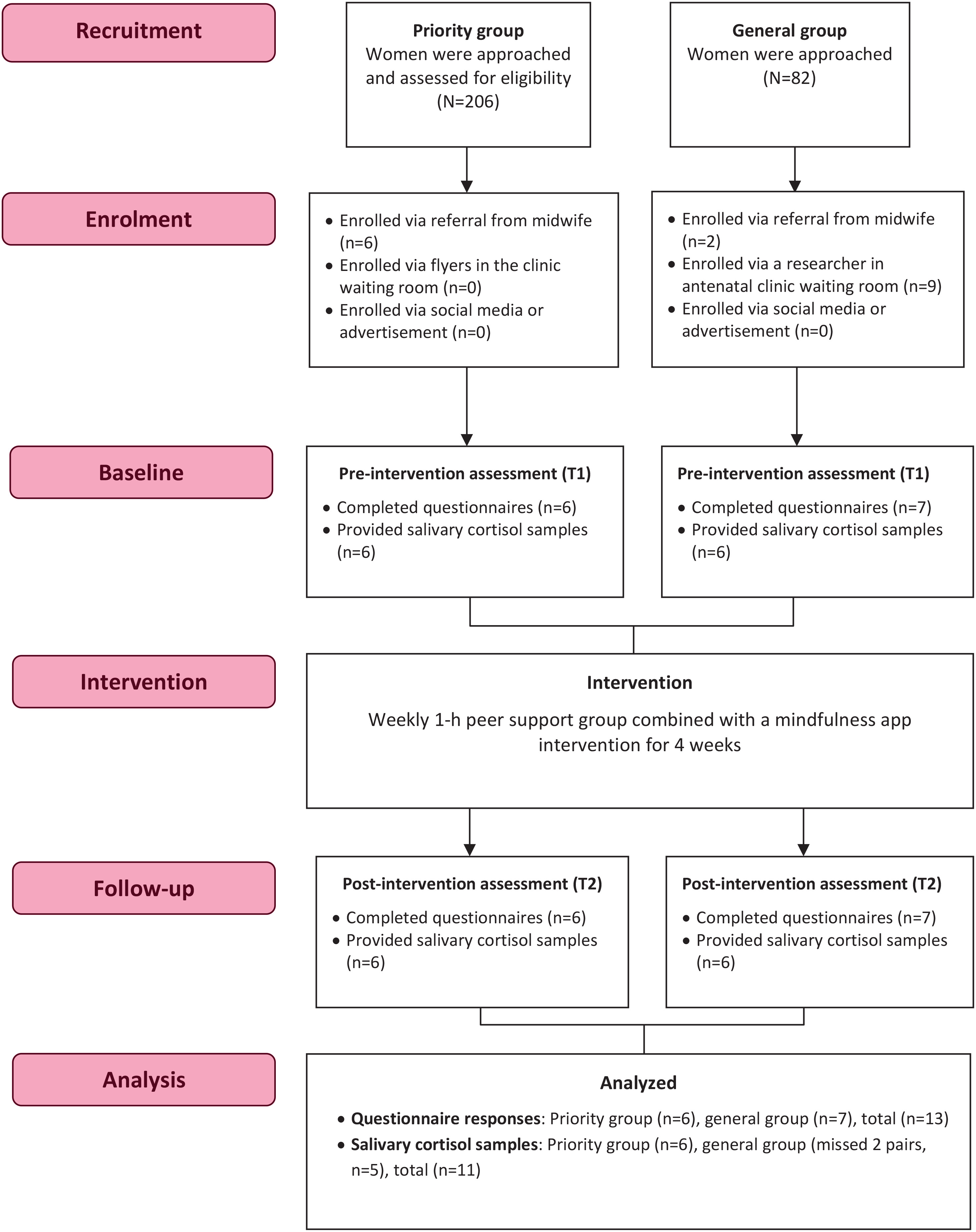
A total of 13 pregnant women participated in this feasibility study (six in the priority group and seven in the general group) and were included in the analysis. Figure 1 presents the study flowchart and recruitment outcomes. Response rates were 2.9% in the priority group (6/206 approached) and 13.4% in the general group (11/82 approached). The enrolment rate in the priority group was 23.1% (6/26 eligible); the enrolment rate for the general group could not be calculated due to unknown eligibility numbers. Retention, defined as continued engagement without withdrawal, was 100%, with all 13 participants attending at least three of four sessions. All participants completed pre- and post-intervention questionnaires, and all data were included in the analysis. For cortisol sampling, all six priority group participants provided paired samples; in the general group, one participant missed the pre-test and another the post-test, resulting in five complete pairs. Overall, 11 of 13 participants (84.6%) provided complete salivary cortisol samples.
Participant characteristics
Participant characteristics are presented in Table 3. Ages ranged from 19 to 35 years (mean=34.23 years, SD=4.64), with a mean gestational age of 21.08 weeks (SD=3.82). Most participants were experiencing their first pregnancy (69.23%) and were born in Australia (61.54%). Almost all (92.31%) reported paid employment, and the majority (85%) had no prior experience using mindfulness applications.
Table 3
Characteristics of the participants, antenatal clinic, NSW, Australia, April 2024–January 2025 (N=13)
Within-group comparison of outcomes
No statistically significant post-intervention changes were observed in DASS-21, mindfulness (FFMQ-15), or perceived social support (MSPSS) scores (p>0.05). Both groups showed small, non-significant numerical increases in mindfulness and perceived social support scores; a slightly larger numerical change was observed in the Friend subscale of the MSPSS, though this did not reach statistical significance (p>0.05) (Table 4).
Table 4
Within-group pre- and post- Depression Anxiety Stress Scales (DASS-21), Five Facet Mindfulness Questionnaire (FFMQ-15) and Multidimensional Scale of Perceived Social Support (MSPSS), antenatal clinic, NSW, Australia, April 2024–January 2025 (N=13)
[i] IQR: interquartile range. Priority group: pregnant women with EPDS score ≥10 or self–reported history of anxiety and/or depression. General group: all other pregnant women with EPDS score <10 and self–reported no history of anxiety and/or depression recruited from the antenatal clinic. Pre: baseline assessment conducted prior to Session 1. Post: assessment conducted following Session 4 (final session). Statistical significance threshold p<0.05.
Between-group comparison of outcomes
A statistically significant between-group difference was observed for DASS-21 scores post-intervention (p=0.004), with a large effect size (r=0.76). Pre-intervention stress scores showed a marginal, non-significant difference between groups (p=0.057). No significant between-group differences were found for depression, anxiety, mindfulness (FFMQ-15), or perceived social support (MSPSS) at any time point (all p>0.05) (Table 5).
Table 5
Comparing the changes in Depression Anxiety Stress Scales (DASS-21), Five Facet Mindfulness Questionnaire (FFMQ-15) and Multidimensional Scale of Perceived Social Support (MSPSS) scores between groups, antenatal clinic, NSW Australia, April 2024–January 2025 (N=13)
[i] IQR: interquartile range. Priority group: pregnant women with EPDS score ≥10 or self-reported history of anxiety and/or depression. General group: all other pregnant women with EPDS score <10 and self-reported no history of anxiety and/or depression recruited from the antenatal clinic. Pre: baseline assessment conducted prior to Session 1. Post: assessment conducted following Session 4 (final session). Statistical significance threshold p<0.05.
Cortisol levels
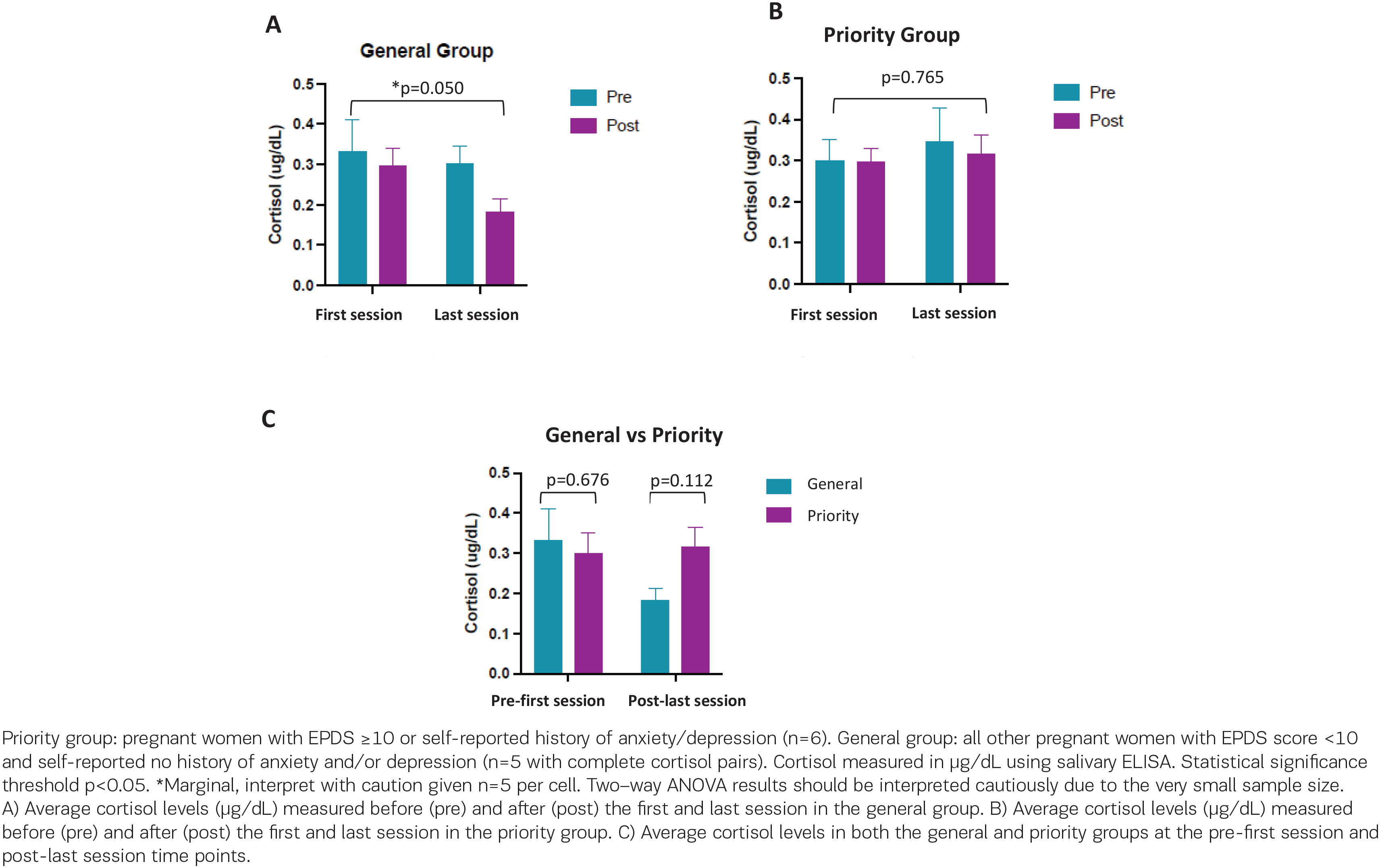
Figure 2 shows cortisol levels (μg/dL) for the general and priority groups across sessions and pre–post time points. Two-way ANOVA revealed no significant main effects for group, session, or time (all p>0.05). A marginal difference in cortisol levels between the pre-first session and post-last session time points was observed in the general group (p=0.050, F(1,8)=5.30, d=1.15). Pearson correlation analysis showed no significant association between cortisol levels (μg/dL) and DASS-21 stress subscale scores (r=0.14, p=0.546).
Figure 2
Mean cortisol levels (μg/dL) by group, session, and time point, antenatal clinic, NSW Australia, April 2024–January 2025 (N=13)
Evaluation of the intervention
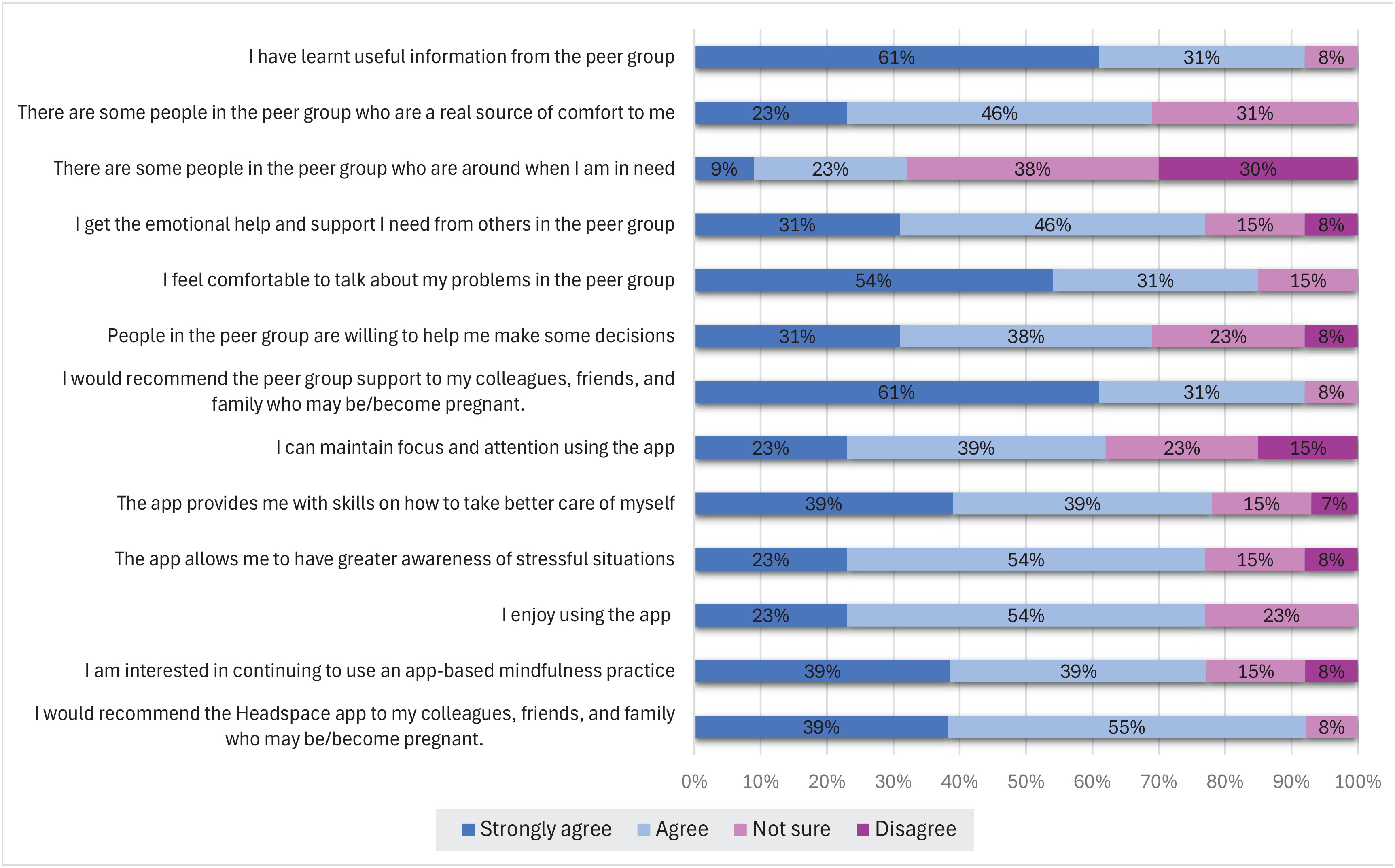
Intervention feedback is shown in Figure 3. Most participants agreed or strongly agreed that they learned useful information from the peer group (92%) and felt comfortable discussing problems (85%). Many reported receiving emotional help and comfort (78%), and 92% would recommend the peer group to others. Regarding the application, most participants felt it provided useful self-care skills (78%) and increased awareness of stress (77%); 78% expressed interest in continued use and 94% would recommend it to others. However, 46% reported lower confidence in maintaining focus when using the application, and 23% expressed mixed views about its benefits during stressful situations.
Qualitative findings
Most comments contained some supportive element of social support theory, with emotional support emerging most prominently in the priority group and informational support in the general group, whereas instrumental support occurred infrequently. Due to overlap between the two groups, findings are presented in an integrated manner and are reported in order of frequency, from most to least common.
Emotional support
More than half of participants reported receiving emotional support through the peer group and mindfulness practice, characterized by feelings of belonging, understanding, and shared experiences. Connecting with women facing similar challenges was central to this support, as one participant noted:
These interactions fostered emotional connection and validation, with another participant describing it as:
Participants also reported increased connection and empowerment, with one stating:
‘The level of support, assistance, advice, discussion, and encouragement is unparalleled elsewhere.’ (P10)
and another describing the experience as:
‘Connection, sharing knowledge, sharing emotions. Feeling like you are not alone and amplifying each other’s energy.’ (P13)
A safe and non-judgmental space was highlighted as a unique form of emotional support in the intervention. Participants described how this environment allowed them to share their experiences and emotions freely, as one participant stated:
‘Being present with other pregnant women and sharing experiences and emotions in a safe, non-judgmental space.’ (P6)
while another noted:
‘A regular meeting time to focus on mental health related to pregnancy in a safe, supportive space.’ (P4)
Participants highlighted that combining peer support with the mindfulness application provided the greatest emotional benefits, noting:
and that:
‘The mindfulness application allows room for calmness and reflection in an environment that can be quite emotional.’ (P12)
One participant emphasized the value of both components together, stating:
However, while some participants valued mindfulness practice, one felt the peer support group was more beneficial, noting:
Informational support
Informational support was expressed by participants in terms of the value of gaining strategies and resources through peer exchange.
Participants highlighted the group’s role in facilitating informational support through sharing knowledge and resources. One participant described:
‘The useful and valuable aspects are the immense valuable knowledge and experience gained over the session that cannot be measured elsewhere.’ (P11)
while others emphasized exchanging practical information, such as:
and:
Some participants noted they could pass this knowledge on to friends, with one stating:
‘I have friends who are also pregnant and able to share and set information around pregnancy.’ (P12)
The mindfulness application was also viewed as a useful source of practical skills, including:
with another participant describing it as:
Appraisal support
Appraisal support emerged in comments from participants in the priority pregnancy group, who reported that regular group sessions helped maintain accountability to both the intervention and personal goals. One participant highlighted the value of ‘regular check-ins to determine and assess goals’ (P3), while another noted that practicing mindfulness in a group fostered shared responsibility for progress:
Instrumental support
Instrumental support was the least frequently reported form of social support. Direct practical assistance or material and financial aid were not identified in participant comments; however, participants expressed willingness to support one another within the peer group. One participant expressed that:
DISCUSSION
The feasibility and acceptability of the intervention
This study aimed to evaluate the feasibility of a novel combined peer support and mindfulness application intervention for pregnant women. Key feasibility findings included: low recruitment rates (particularly in pregnant women at risk of anxiety and/or depression), 100% retention, high acceptability based on participant satisfaction, and a statistically significant between-group difference in post-intervention stress (to be interpreted with caution). No statistically significant within-group pre-to-post changes were observed for any psychological outcome. However, qualitative findings suggested that combining peer support with mindfulness promoted emotional support, connection, and engagement in practice. Participants valued the program and were willing to recommend it to others.
Recruitment of pregnant women at risk of anxiety and/or depression was limited, highlighting a major feasibility challenge in identifying and enrolling this priority population. Despite multiple recruitment strategies, few women met eligibility criteria or enrolled, constraining sample size and limiting generalizability. Similar recruitment difficulties have been reported in Australian antenatal mindfulness studies targeting women with elevated psychological distress, indicating a persistent challenge in engaging this group22. Although posters and social media generated interest, as reported previously23, these approaches produced the lowest conversion to enrolment and yielded no participants in the present study. Recruitment via midwives resulted in the highest enrolment among women at higher risk, while direct researcher recruitment was more effective for the general pregnant population.
Despite recruitment challenges, retention was 100%, indicating strong acceptability among both women at higher risk of anxiety and depression and those from the general pregnant population. Although no prior studies have examined combined peer support and mindfulness interventions, this finding aligns with evidence showing peer support adherence rates above 80%6 and average attrition of approximately 22.5% for mindfulness-based interventions alone24. The integration of peer support with mindfulness is consistent with the high retention observed, though causal attribution is not possible given the non-randomized design. Evaluation surveys indicated overall satisfaction with the user experience, and qualitative feedback highlighted appreciation for the flexible format and the combined peer support–mindfulness approach. Indeed, there is evidence that antenatal peer support can help alleviate feelings of isolation and foster a sense of empowerment among pregnant women25. Although one participant preferred peer support over mindfulness practice, they reported they would still recommend both components to pregnant friends.
Preliminary outcomes (exploratory)
This study was designed to evaluate the intervention’s practicality and feasibility rather than to identify definitive outcome changes; the outcome data presented must, therefore, be interpreted with caution. Nevertheless, these findings suggest some evidence of between-group differences over time among women who participated in the intervention. Given the small sample size and non-randomized design, these between-group findings should be interpreted with caution and considered hypothesis-generating rather than confirmatory.
Post-intervention stress scores were lower in the general group than in the priority group. However, the priority group had higher baseline stress levels, although this difference was not statistically significant. The post-intervention difference should therefore be interpreted cautiously, as it may reflect the baseline imbalance rather than a true difference between the groups. Nevertheless, the observed pattern is consistent with prior evidence suggesting mindfulness-based interventions may show differential effects across risk strata and may require adaptation for women with more complex comorbidities26. Notably, cortisol levels did not correlate with self-reported stress in either group post-intervention, consistent with prior findings that mindfulness may reduce perceived prenatal stress without significantly altering cortisol-based measures, potentially due to poor adherence to sampling protocols27. Given the small sample size and exploratory nature of the analysis, the marginal reduction in cortisol observed in the general group between the first and last sessions should be interpreted cautiously.
No statistically significant within-group changes in anxiety or depression were observed in either the priority or general group. Previous peer support research has reported significant reductions in depression and anxiety, particularly when interventions included postnatal involvement and peer volunteers with lived experience of postpartum depression28. Meta-analyses suggest that while peer support during pregnancy may be beneficial, effects are more consistently observed postpartum6, possibly due to the immediate challenges after birth (e.g. infant care, breastfeeding, sleep deprivation) that intensify stress and create a critical window for support29. Therefore, while symptom reduction may be limited during pregnancy, improvements in loneliness, connectedness and overall self-efficacy remain valuable outcomes, warranting further exploration in future research.
Although no statistically significant pre–post differences were observed, mindfulness outcomes were considered encouraging. Previous studies have shown that longer duration interventions can significantly enhance mindfulness during pregnancy; for example, an 8-week mobile-delivered mindfulness-based intervention improved mindfulness in a randomized controlled trial of 178 participants30, and a 6-week application-based mindfulness program increased mindfulness among women with moderate depressive symptoms in a smaller pre–post study31. These suggest that a longer intervention period and larger samples are needed to confirm and further explore the effects of combining mindfulness practice with peer support.
Although perceived social support scores did not significantly increase from pre- to post-intervention, the qualitative findings provided valuable insights into participants’ experiences. Responses to open-ended post-intervention questions suggested that the intervention was perceived as beneficial in several ways consistent with social support theory. Emotional support appears to be a key element of the positive participant experiences reported, particularly among women in the priority group, consistent with findings from previous peer support interventions32. To our knowledge, however, no previous intervention has used this specific combination of peer support and a mindfulness application. Low emotional support has been identified as significantly associated with antenatal depression in Australian women33, with its absence linked to increased feelings of loneliness34. Emotional support was particularly critical during the COVID-19 pandemic when many women experienced heightened isolation and loneliness35. In some cases, this support was limited when spouses or families were distant or unable to assist directly, creating additional challenges36.
Participants’ perceptions of the intervention suggest that combining peer support and mindfulness supported both interpersonal connection and individual coping, offering a possible explanation for the intervention’s acceptability and retention. This aligns with existing evidence that group-based mindfulness can foster connectedness and a supportive environment26. Peer support similarly offers emotional safety and validation often lacking in other contexts32. Consistent with participants’ accounts of valuing being heard and feeling able to express emotions they might otherwise suppress. Although peer support and mindfulness have typically been examined separately, these preliminary findings suggest possible added value in combining both, though this warrants confirmation in future controlled studies.
Limitations
Several methodological limitations should be acknowledged. The small sample size limited statistical power, and the absence of a control group precludes definitive attribution of observed changes to the intervention. The non-randomized design without a control group means that observed changes in outcomes cannot be attributed to the intervention. Confounding factors such as natural symptom variation cannot be excluded. The use of a convenience sampling strategy also introduces selection bias, as participants who volunteered to take part may differ systematically from non-participants in motivation. Generalizability is also limited by the self-selected sample, single-site setting at one public hospital in New South Wales, and the predominantly employed, first-time mother participants, who may not represent the broader antenatal population or other healthcare and cultural contexts. In addition, the expansion of inclusion criteria may have created a heterogeneous sample with differing baseline risk profiles. The multiple comparisons performed without adjustment increase the risk of Type I error; therefore, the significant between-group difference in stress should be considered hypothesis-generating rather than confirmatory. Self-report bias may also have affected psychological outcome measures, as participants may have responded in socially desirable ways or had difficulty recalling their psychological states. The salivary cortisol analysis should be considered exploratory because the very small cell sizes made it difficult to verify ANOVA assumptions. Finally, without follow-up assessment, it is unknown whether any observed changes or participant-reported benefits were maintained beyond the four-week intervention.
CONCLUSIONS
This novel intervention, combining peer support with a mindfulness application, was evaluated for feasibility in relation to pregnant women’s mental health, mindfulness practice, and perceived social support. Recruitment challenges limited statistical power, indicating the need for improved recruitment strategies in future trials. Some benefits were observed in emotional support; however, negative mental health outcomes, including affect, anxiety, depression, and stress, did not demonstrate significant improvement. Future research should employ adequately powered randomized controlled trial designs with control conditions, longer intervention durations, including possible extension into the postpartum period, and follow-up assessments to determine whether benefits are maintained over time and can be attributed to the combined intervention.

