

INTRODUCTION
Hemorrhoidal disease is one of the most common anorectal disorders worldwide and frequently affects women during pregnancy and the postpartum period, representing an important maternal health concern1,2. Physiological changes during pregnancy, including progesterone-induced smooth muscle relaxation, reduced bowel motility, increased venous pressure from the enlarging uterus, and elevated intra-abdominal pressure, predispose women to the development of hemorrhoidal disease3,4. In addition, prolonged straining during vaginal birth may exacerbate pre-existing hemorrhoidal disease and contribute to persistent postpartum symptoms5.
Previous prospective studies have reported that hemorrhoidal disease is common during pregnancy and the postpartum period, although prevalence varies according to the timing of assessment. Poskus et al.6 reported that 40.7% of women developed hemorrhoidal disease during pregnancy or within 1 month postpartum, whereas Parés et al.7 reported prevalences of 23% during the third trimester of pregnancy and 36.2% at 1 month postpartum. Hemorrhoidal disease is commonly associated with pain, bleeding, pruritus, and discomfort, and may substantially impair quality of life1,8,9. Similar symptoms have also shown to adversely affect well-being among pregnant and postpartum women5,10. Despite its high prevalence, hemorrhoidal disease has received relatively little attention compared with other pregnancy-related conditions5.
Previous reviews and prospective studies have identified several obstetric and lifestyle-related factors associated with hemorrhoidal disease during pregnancy and the postpartum period5-8. Reported risk factors include a history of hemorrhoidal disease before pregnancy, constipation, prolonged second-stage labor, higher neonatal birthweight, obesity, parity, bowel habits, dietary habits, inadequate fluid intake, and physical inactivity5-7.
Although several epidemiological studies have investigated hemorrhoidal disease during pregnancy and the postpartum period internationally3, evidence from Japan remains limited, with only a few published studies available11,12. In particular, few Japanese studies have comprehensively examined both obstetric and lifestyle-related factors associated with hemorrhoidal disease during pregnancy and the postpartum period. Furthermore, evidence regarding potentially modifiable factors that could be targeted through preventive interventions remains insufficient.
Therefore, this study aimed to determine the prevalence and symptoms of hemorrhoidal disease among Japanese women during pregnancy and the postpartum period and to identify factors associated with its occurrence. These findings may facilitate the early identification of women at high risk of hemorrhoidal disease and provide evidence to support health education and preventive interventions during pregnancy and the postpartum period.
METHODS
Study design
This cross-sectional study aimed to determine the prevalence and symptoms of hemorrhoidal disease during pregnancy and the postpartum period and to identify factors associated with its occurrence.
Participants and setting
Participants were women aged ≥18 years who had completed their 1-month postpartum health check-up. Eligible participants were women who visited one of the participating community child-rearing support centers or attended a 4-month infant health check-up and were able to complete a self-administered questionnaire in Japanese. Women who provided written informed consent were included.
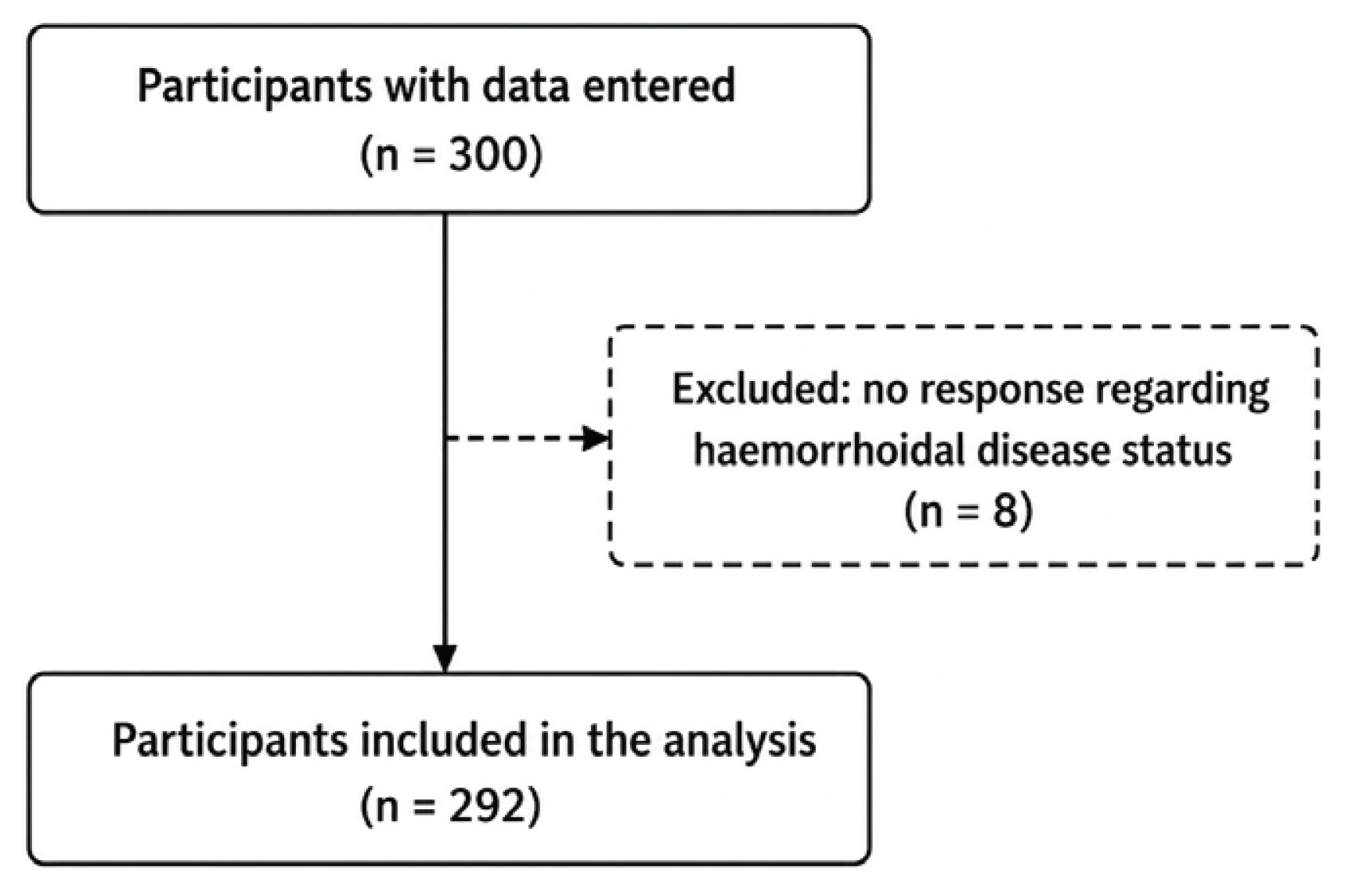
Women receiving treatment for hemorrhoidal disease before pregnancy or who had received treatment for venous thrombosis during pregnancy were excluded. Participants were recruited using a facility-based convenience sampling approach from six community child-rearing support centers and 4-month infant health check-up venues in Kagawa Prefecture. Facility staff also informed women visiting the facilities about the study. Recruitment posters describing the study and eligibility criteria were displayed at the participating facilities. Women who expressed interest in participating were individually assessed for eligibility by either the researchers or facility staff. The numbers of women approached, found to be ineligible, or declining participation were not recorded. Recruitment continued until 300 completed questionnaires had been obtained. Of these, eight were excluded because responses to one or more questions regarding hemorrhoid disease were unavailable, leaving 292 participants for the overall analysis. The number of participants included in each multivariable model varied because of missing data and is reported in the corresponding tables. The participant inclusion process is shown in Figure 1.
Data collection
Data were collected between May and September 2023 using an anonymous, self-administered questionnaire. The purpose and procedures of the study were explained verbally and in writing by the researchers, and questionnaires were distributed to women who agreed to participate.
Measurements
The questionnaire was developed specifically for this study based on previous studies and was not a previously validated questionnaire. No formal pilot testing was conducted. To minimize information bias, standardized written instructions were included in the questionnaire to ensure consistent interpretation of the questions by all participants.
The questionnaire comprised sections on maternal and obstetric characteristics, history of hemorrhoidal disease before pregnancy, hemorrhoidal disease during pregnancy and the postpartum period, and lifestyle factors potentially associated with hemorrhoidal disease.
Study variables
Maternal and obstetric characteristics
Maternal and obstetric characteristics included maternal age, pre-pregnancy body mass index (BMI), parity, mode of birth, duration of labor, duration of the second stage of labor and neonatal birth weight.
Parity was categorized as primiparous or multiparous, and mode of birth was categorized as vaginal or caesarean birth. Age, BMI, duration of labor, duration of the second stage of labor, and neonatal birth weight were treated as continuous variables.
Hemorrhoidal disease during pregnancy and the postpartum period
Participants were classified into four groups based on hemorrhoidal disease status during pregnancy and the postpartum period: hemorrhoidal disease during pregnancy only, hemorrhoidal disease during the postpartum period only (new-onset), hemorrhoidal disease during both pregnancy and the postpartum period (persistent), and neither period.
Participants were asked whether they had experienced hemorrhoidal disease during pregnancy. Postpartum hemorrhoidal disease was assessed as hemorrhoidal disease experienced at any time from childbirth to completion of the questionnaire. The postpartum assessment period ranged from approximately 1 to 4 months after childbirth, depending on the timing of questionnaire completion. Women reporting hemorrhoidal disease were asked about symptoms, including pain, discomfort, pruritus, bleeding, and mucus discharge, as well as the timing of onset.
Lifestyle factors
Information was collected on breakfast consumption, subjective constipation, perceived adequacy of dietary fibre intake, and perceived adequacy of water intake before pregnancy and during the postpartum period, as well as exercise habits during pregnancy and the postpartum period.
Lifestyle factors were assessed using self-reported questionnaire items. Breakfast consumption, subjective constipation, perceived adequacy of dietary fibre intake, perceived adequacy of water intake, and exercise during the week were assessed using dichotomous yes/no questions. For these variables, “No” was coded as 0 and “Yes” as 1. Mode of birth was categorised as vaginal or caesarean birth. Other categorical variables were coded as binary variables as appropriate. History of haemorrhoidal disease before pregnancy was assessed as a dichotomous variable, with “No” coded as 0 and “Yes” as 1.
Sample size
No formal power calculation was performed. Based on advice from a statistical expert, approximately 100 women with hemorrhoidal disease were considered necessary for the planned multivariable logistic regression analysis. Previous studies have reported that the prevalence of hemorrhoidal disease during pregnancy and the postpartum period is approximately 30–40%. Therefore, a target sample size of approximately 300 participants was set, with the expectation of obtaining approximately 90–120 women with hemorrhoidal disease.
Missing responses occurred for some variables, and the number of observations therefore varied across variables. For multivariable analyses, participants with missing data for any variable included in the respective model were excluded using complete-case analysis.
Statistical analysis
Statistical analyses were performed using EZR (Easy R) (Kanda, 2013)13, a graphical user interface for R (The R Foundation for Statistical Computing, Vienna, Austria).
Participant characteristics are summarized using mean ± standard deviation (SD) or median and interquartile range (range) for continuous variables, and frequencies and percentages for categorical variables. The normality of continuous variables was assessed using the Kolmogorov–Smirnov test. Continuous variables were compared using the Mann–Whitney U test, and categorical variables were compared using Pearson’s chi-squared test with Yates’ continuity correction or Fisher’s exact test, as appropriate. For categorical variables, unadjusted odds ratios (ORs) with 95% confidence intervals (CIs) were calculated. The prevalence and symptoms of hemorrhoidal disease were summarized descriptively.
Multivariable logistic regression analyses were performed separately for hemorrhoidal disease during pregnancy and during the postpartum period. For hemorrhoidal disease during pregnancy, the model included maternal age, pre-pregnancy BMI, parity, history of hemorrhoidal disease before pregnancy, breakfast consumption before pregnancy, subjective constipation before pregnancy, exercise during the week (during pregnancy), perceived adequacy of dietary fibre intake before pregnancy, and perceived adequacy of water intake before pregnancy. For postpartum hemorrhoidal disease, two sequential models were fitted. Model 1 included maternal age, pre-pregnancy BMI, parity, history of hemorrhoidal disease before pregnancy, neonatal birth weight, duration of the second stage of labor, total duration of labor, and mode of birth. Model 2 additionally included hemorrhoidal disease during pregnancy. For the multivariable analyses, complete-case analysis was performed. For the postpartum analyses, the same complete-case population was used for both Model 1 and Model 2. The number of participants included was 275 for the pregnancy model and 151 for both postpartum models because of missing data.
Variables were selected based on previous evidence and clinical relevance rather than solely on statistical significance in univariable analyses. Results are presented as adjusted odds ratios (AORs) with 95% confidence intervals (95% CIs). Statistical significance was defined as a two-sided p<0.05.
Ethical considerations
This study was conducted in accordance with the principles of the Declaration of Helsinki and the Ethical Guidelines for Medical and Health Research Involving Human Subjects in Japan. Ethical approval was obtained from the Ethics Committee of the Kagawa Prefectural University of Health Sciences (Approval number: 414; approved on 26 April 2023). Permission to conduct the study was subsequently obtained from the directors of the child-rearing support centers where the participants were recruited. Potential participants received written information explaining the purpose and procedures of the study, voluntary nature of participation, protection of personal information, and their right to withdraw at any time without disadvantage. Written informed consent was obtained from all participants before they completed the questionnaire.
RESULTS
Prevalence and symptoms of hemorrhoidal disease
A total of 300 participant records were entered into the dataset. Eight participants were excluded because they had no information regarding hemorrhoidal disease status, leaving 292 participants for the analysis. Participant characteristics and the prevalence of hemorrhoidal disease are summarized in Table 1. The mean maternal age was 34.2 ± 6.0 years, and the mean pre-pregnancy BMI was 20.8 ± 2.7 kg/m². Overall, 145 (49.8%) of participants were primiparous, and 190 (65.1%) had a vaginal birth. Before pregnancy, 97 (33.3%) of women reported a history of hemorrhoidal disease. Hemorrhoidal disease was reported by 104 (35.9%) participants during pregnancy and 102 (35.1%) during the postpartum period. Among the 289 participants with available data on haemorrhoidal disease status for both periods, 44 (15.2%) had haemorrhoidal disease during pregnancy only, 41 (14.2%) had new-onset haemorrhoidal disease during the postpartum period, 60 (20.8%) had haemorrhoidal disease during both periods, and 144 (49.8%) had no haemorrhoidal disease during either period.
Table 1
Characteristics of women aged 18 years or older recruited through community child-rearing support centres and 4-month infant health check-up venues in Kagawa Prefecture, Japan, from May to September
[i] Data are presented as mean ± standard deviation (SD), median (range), or n/N (%). Abbreviations: BMI, body mass index; HD, haemorrhoidal disease. The number of participants varied slightly across variables because of missing responses. Fundal pressure was assessed among women who had vaginal births (n = 190).
The prevalence and symptoms of hemorrhoidal disease are summarized in Table 2. Pain was the most common symptom during pregnancy (71.2%), followed by bleeding (54.8%) and discomfort (43.3%). During the postpartum period, pain was also the most common symptom (65.7%), followed by discomfort (46.1%) and bleeding (39.2%). Pruritus and mucus discharge were relatively uncommon during both periods.
Table 2
Prevalence and symptoms of HD during pregnancy and the postpartum period among women aged 18 years or older recruited through community child-rearing support centres and 4-month infant health check-up venues in Kagawa Prefecture, Japan, from May to September 2023 (N = 292)
[i] The number of participants varied because of missing responses. The denominators for the prevalence of HD reflect the number of participants with available data for each period. Percentages for symptoms were calculated among women with HD during pregnancy (n=104) or the postpartum period (n=102), respectively. Abbreviations: HD: hemorrhoidal disease.
Factors associated with hemorrhoidal disease
Comparisons between women with and without hemorrhoidal disease during pregnancy are shown in Table 3. Women with a history of hemorrhoidal disease before pregnancy had a higher prevalence of hemorrhoidal disease during pregnancy than those without such a history (71.9% vs 18.1%, P < 0.001; unadjusted OR, 11.41; 95% CI, 6.24–21.42). No significant differences were observed in maternal age, BMI, parity, or lifestyle habits before pregnancy and exercise habits during pregnancy (all P > 0.05).
Table 3
Comparison of characteristics between women with and without HD during pregnancy among women aged 18 years or older recruited through community child-rearing support centres and 4-month infant health check-up venues in Kagawa Prefecture, Japan, from May to September 2023 (N = 292)
[i] Data are presented as median (range) or n (%). Percentages are calculated within rows. P values were calculated using the Mann–Whitney U test for continuous variables and Pearson's chi-square test with Yates' continuity correction or Fisher's exact test for categorical variables. Lifestyle factors were assessed using self-reported dichotomous questions. For each variable, “Yes” and “No” correspond to the presence and absence of the respective condition or behavior, as defined in the Methods section. The number of participants varied across variables because of missing responses. Abbreviations: BMI: body mass index. HD: hemorrhoidal disease. OR, odds ratio; CI, confidence interval.
Comparisons between women with and without postpartum hemorrhoidal disease are presented in Supplementary file Table 1. Women with a history of hemorrhoidal disease before pregnancy had a higher prevalence of postpartum hemorrhoidal disease than those without such a history (61.9% vs 21.2%, p<0.001; OR=5.97; 95% CI: 3.40–10.64). No significant differences were observed in maternal age, BMI, birth weight, labor duration, second-stage duration, parity, or lifestyle habits during the postpartum period (all P > 0.05).
Comparison of resolved and persistent hemorrhoidal disease
Comparisons between women with resolved and persistent hemorrhoidal disease are shown in Supplementary file Table 2. Among women who had hemorrhoidal disease during pregnancy, those with persistent hemorrhoidal disease had a higher neonatal birth weight than those with resolved hemorrhoidal disease (p=0.028). A history of hemorrhoidal disease before pregnancy was also more common among women with persistent hemorrhoidal disease than among those with resolved hemorrhoidal disease (76.7% vs 52.3%, p=0.012; OR=2.97; 95% CI: 1.19–7.60). No significant differences were observed for the other maternal, obstetric, or lifestyle factors assessed during the postpartum period (P > 0.05).
Comparison of new-onset and neither hemorrhoidal disease
Comparisons between women with new-onset postpartum hemorrhoidal disease and those without hemorrhoidal disease during either period are shown in Supplementary file Table 3. A history of hemorrhoidal disease before pregnancy was more common among women with new-onset postpartum hemorrhoidal disease than among those without hemorrhoidal disease during either period (32.5% vs 9.7%, p<0.001; OR=4.42; 95% CI:1.71–11.49). No significant differences were observed for the other maternal, obstetric, or lifestyle factors assessed during the postpartum period (P > 0.05).
Multivariable logistic regression analysis for hemorrhoidal disease
The results of the multivariable logistic regression analysis for hemorrhoidal disease during pregnancy are presented in Table 4. After adjustment for maternal age, BMI, parity, history of hemorrhoidal disease before pregnancy, lifestyle habits assessed before pregnancy, and exercise habits assessed during pregnancy, a history of haemorrhoidal disease before pregnancy was associated with higher odds of haemorrhoidal disease during pregnancy (aOR 12.60, 95% CI 6.70–23.60, P < 0.001). Maternal age, BMI, parity, breakfast consumption, constipation, exercise, perceived adequacy of dietary fibre intake, and perceived adequacy of water intake were not significantly associated with haemorrhoidal disease during pregnancy (all P > 0.05).
Table 4
Multivariable logistic regression analysis of factors associated with HD during pregnancy among women aged 18 years or older recruited through community child-rearing support centres and 4-month infant health check-up venues in Kagawa Prefecture, Japan, from May to September 2023 (N = 275)
[i] Adjusted for age, BMI, parity, history of HD before pregnancy, breakfast consumption before pregnancy, subjective constipation before pregnancy, exercise during pregnancy, perceived adequacy of dietary fibre intake before pregnancy, and perceived adequacy of water intake before pregnancy. Abbreviations: OR, odds ratio; aOR, adjusted odds ratio; CI, confidence interval; BMI, body mass index; HD, haemorrhoidal disease.
The results of the multivariable logistic regression analyses for postpartum hemorrhoidal disease are presented in Table 5. In Model 1, a history of hemorrhoidal disease before pregnancy was associated with higher odds of postpartum hemorrhoidal disease (AOR=4.24; 95% CI: 2.01–9.25, p<0.001). In Model 2, which additionally adjusted for hemorrhoidal disease during pregnancy, hemorrhoidal disease during pregnancy was associated with more than fourfold higher odds of postpartum hemorrhoidal disease (AOR=4.27; 95% CI: 1.86–10.12, p<0.001). A history of hemorrhoidal disease before pregnancy was no longer statistically significant after adjustment for hemorrhoidal disease during pregnancy (AOR=2.16; 95% CI: 0.89–5.22, p=0.086). Maternal age, birth weight, BMI, parity, labor duration, second-stage duration, and mode of birth were not significantly associated with postpartum hemorrhoidal disease (all p>0.05).
Table 5
Multivariable logistic regression analysis of factors associated with postpartum HD among women aged 18 years or older recruited through community child-rearing support centres and 4-month infant health check-up venues in Kagawa Prefecture, Japan, from May to September 2023 (N=151)
[i] N = 151 for both models. Model 1 was adjusted for age, BMI, parity, history of HD before pregnancy, birthweight, second-stage duration, labor duration, and mode of birth. Model 2 was additionally adjusted for HD during pregnancy. Abbreviations: OR, odds ratio; aOR, adjusted odds ratio; CI, confidence interval; BMI, body mass index; HD, haemorrhoidal disease.
DISCUSSION
In this study, the prevalence of hemorrhoidal disease was 35.9% during pregnancy and 35.1% during the postpartum period. Overall, 50.2% of women experienced hemorrhoidal disease during either period, including 15.2% during pregnancy only, 14.2% during the postpartum period only (new-onset), and 20.8% during both periods.
The prevalence of hemorrhoidal disease observed in this study was consistent with that reported in previous international studies. Poskus et al.6 reported that 40.7% of women developed hemorrhoidal disease during pregnancy or within 1 month after childbirth, whereas Parés et al.7 reported prevalences of 23% during the third trimester and 36.2% at 1 month postpartum. More recently, Sabonytė-Balsaitienė et al.14 reported that 34.6% of women experienced hemorrhoidal disease after childbirth in a prospective cohort study, comparable to the postpartum prevalence observed in this study. In addition, Chen et al.15 identified a history of hemorrhoidal disease before pregnancy as an important predictor of hemorrhoidal disease during pregnancy in a nationwide population-based cohort study from Taiwan. Although prevalence estimates vary because of differences in study design, diagnostic criteria, and timing of assessment, the prevalence observed in the present study falls within the range reported internationally. To our knowledge, epidemiological evidence on hemorrhoidal disease during pregnancy and the postpartum period in Japan remains limited. Therefore, these findings provide important baseline data on the prevalence of hemorrhoidal disease among pregnant and postpartum Japanese women.
Pain was the most frequently reported symptom of hemorrhoidal disease during both pregnancy and the postpartum period. During pregnancy, pain was followed by bleeding and discomfort, whereas during the postpartum period, pain was followed by discomfort and bleeding. This symptom profile is consistent with previous studies identifying pain and bleeding as the predominant symptoms of symptomatic hemorrhoidal disease during pregnancy and puerperium7,16. Pain associated with hemorrhoidal disease may substantially impair quality of life, ranging from mild discomfort to considerable difficulty performing daily activities, particularly during the postpartum period. Åhlund et al.10 further reported that many women continued to experience bothersome hemorrhoidal symptoms long after childbirth and often felt that their condition was neglected by healthcare professionals. Although hemorrhoidal disease is not generally regarded as a life-threatening condition, persistent pain and discomfort during pregnancy and the postpartum period may adversely affect maternal well-being. Therefore, appropriate recognition and management of hemorrhoidal disease may be relevant to postpartum maternal care.
In the postpartum analysis, a history of hemorrhoidal disease before pregnancy was associated with higher odds of postpartum hemorrhoidal disease in Model 1 (AOR=4.24; 95% CI: 2.01–9.25). After additionally adjusting for hemorrhoidal disease during pregnancy in Model 2, the association was attenuated (AOR=2.16; 95% CI: 0.89–5.22) and was no longer statistically significant, whereas hemorrhoidal disease during pregnancy was associated with more than fourfold higher odds of postpartum hemorrhoidal disease (AOR=4.27; 95% CI: 1.86–10.12).
This attenuation may be partly explained by the strong association between a history of hemorrhoidal disease before pregnancy and hemorrhoidal disease during pregnancy. Hemorrhoidal disease during pregnancy may lie on the pathway between pre-pregnancy hemorrhoidal disease and postpartum hemorrhoidal disease; therefore, adjustment for hemorrhoidal disease during pregnancy may have attenuated the observed association with pre-pregnancy history. However, this interpretation remains speculative because of the cross-sectional design and the retrospective assessment of hemorrhoidal disease during pregnancy.
A history of hemorrhoidal disease, constipation, prolonged second-stage labor, and higher neonatal birth weight have been reported to be associated with hemorrhoidal disease6,7. In the present study, a history of hemorrhoidal disease before pregnancy was strongly associated with hemorrhoidal disease during pregnancy, whereas the other factors were not statistically significant in the multivariable analysis. More recently, D’Alfonso et al.17 likewise reported that a history of hemorrhoidal disease before pregnancy was the only factor independently associated with hemorrhoidal disease during pregnancy, whereas constipation, dietary fiber intake, and fluid intake were not independently associated with disease occurrence. These findings are consistent with those of the present study. The absence of statistically significant associations between the assessed lifestyle factors and hemorrhoidal disease should be interpreted cautiously. These factors were assessed using self-reported questionnaire items, and misclassification or measurement error may have attenuated the observed associations. The present study found associations across the pre-pregnancy, pregnancy, and postpartum periods. However, given the cross-sectional design, these findings do not establish temporal or causal relationships between hemorrhoidal disease across these periods.
Among women without hemorrhoidal disease during pregnancy, a history of hemorrhoidal disease before pregnancy was more common among those who developed new-onset postpartum hemorrhoidal disease than among those without hemorrhoidal disease during either period (32.5% vs 9.7%, p<0.001; OR=4.42; 95% CI: 1.71–11.49). No other maternal, obstetric, or lifestyle factors showed statistically significant differences. These findings should be interpreted cautiously given the relatively small number of women with new-onset postpartum hemorrhoidal disease.
Among women who experienced hemorrhoidal disease during pregnancy, a history of hemorrhoidal disease before pregnancy was more common among those whose disease persisted into the postpartum period than among those whose disease resolved (76.7% vs 52.3%, p=0.012; OR=2.97; 95% CI: 1.19–7.60). Persistent hemorrhoidal disease was also associated with higher neonatal birth weight (p=0.028). These findings may suggest that pre-existing hemorrhoidal disease and higher neonatal birth weight may be relevant to persistence of hemorrhoidal disease beyond childbirth. The clinical relevance of these differences requires further investigation. However, these findings should be interpreted cautiously because of the cross-sectional design and the relatively small subgroup sizes.
Limitations
This study has several limitations. First, hemorrhoidal disease and its symptoms were assessed using self-reported questionnaires rather than clinical examinations, which may have resulted in misclassification or recall bias. The timing of postpartum assessment varied among participants, with questionnaires completed approximately 1 to 4 months after childbirth. Because postpartum hemorrhoidal disease was assessed retrospectively from childbirth to questionnaire completion, differences in the length of the assessment period may have influenced the reported prevalence of postpartum hemorrhoidal disease. Second, the cross-sectional design precludes conclusions regarding causal relationships between the identified factors and hemorrhoidal disease. Third, participants were recruited from child-rearing support centers in a single prefecture of Japan, which may limit the generalizability of the findings. Finally, complete-case analysis was used for the multivariable logistic regression analyses, and participants with missing data were excluded, which may have introduced selection bias. Residual confounding cannot be excluded because some potentially relevant factors may not have been measured or adequately controlled for in the multivariable analyses. Despite these limitations, this study provides epidemiological data on hemorrhoidal disease during pregnancy and the postpartum period among Japanese women. Longitudinal studies with clinical assessment and prospective follow-up are needed to clarify the temporal patterns of hemorrhoidal disease and factors associated with persistence or new onset.
CONCLUSIONS
The prevalence of haemorrhoidal disease was 35.9% during pregnancy and 35.1% during the postpartum period. Haemorrhoidal disease was present during both periods in 20.8% of the participants. A history of hemorrhoidal disease before pregnancy was associated with hemorrhoidal disease during pregnancy, and hemorrhoidal disease during pregnancy was associated with more than fourfold higher odds of postpartum hemorrhoidal disease. Among women with hemorrhoidal disease during pregnancy, a history of hemorrhoidal disease before pregnancy was more common among those with persistent hemorrhoidal disease than among those whose disease resolved, and persistent hemorrhoidal disease was associated with higher neonatal birth weight. These findings indicate associations across the pre-pregnancy, pregnancy, and postpartum periods; however, temporal or causal relationships cannot be established because of the cross-sectional design. Longitudinal studies are needed to clarify the temporal patterns and factors associated with persistence and new onset of hemorrhoidal disease.