


INTRODUCTION
Premature rupture of membranes (PROM) is defined as the loss of integrity of the amniotic membranes prior to the spontaneous onset of labour1. Although this condition may occur at any stage of pregnancy, the present study focuses specifically on the management of PROM when the pregnancy has reached term (between 37 and 42 weeks of gestation). The incidence of term PROM is estimated to range between 8% and 10% of all pregnancies, and its etiology is considered multifactorial2,3.
The central issue in the management of women with term PROM lies in the clinical decision-making process regarding whether to allow a defined period of spontaneous labor onset (expectant management), or whether it is more beneficial for the mother and the neonate to proceed with medical intervention to induce labor (active management) following membrane rupture4,5.
Clinicians who advocate for active management ground their decision on evidence suggesting that labor induction reduces the risk of intrauterine infection, umbilical cord prolapse, placental abruption, and neonatal asphyxia, as well as the duration of labor and the incidence of postpartum endometritis1,3,6-8. Despite these associated benefits, it is important to acknowledge that active management may impair uteroplacental perfusion, potentially leading to fetal heart rate abnormalities, increased rates of instrumental deliveries, uterine tachysystole or hypertonia, uterine rupture, meconium aspiration syndrome, higher levels of medical intervention, and failed inductions2,3,6-9.
Conversely, proponents of expectant management – when no signs of infection are present (e.g. maternal or fetal tachycardia, fever, or meconium-stained amniotic fluid) – argue that this approach is associated with a higher likelihood of spontaneous labor onset10,11. Up to 60% of women enter active labor spontaneously within the first 24 hours after PROM, and up to 95% do so within 72 hours12. Additionally, expectant management has been linked to higher rates of intact perineum, shorter hospital stays, and lower rates of cesarean sections, iatrogenic interventions, and other medical procedures during labour1,3,10,11.
It is essential that healthcare professionals provide pregnant women with clear and comprehensive information regarding the risks and benefits of both management strategies, thereby enabling them to make informed decisions based on their individual circumstances and preferences13. Most clinical practice guidelines consider it safe to wait up to 24 hours before initiating active management, as a high proportion of women will commence active labor spontaneously within this timeframe. These guidelines recommend induction after 24 hours in cases where labor has not yet commenced2,5,13.
In the clinical context under study, active management is understood as the initiation of pharmacological treatment using prostaglandins E1 or E2, or mechanical treatment with a double-balloon catheter for cervical ripening, when the Bishop score is <6; or intravenous oxytocin infusion if the Bishop score is ≥614. In contrast, expectant management refers to the absence of medical intervention following PROM until 24–48 hours have passed.
The optimal timing for initiating labor induction when spontaneous labor does not occur post PROM in term pregnancies remains unclear, particularly in balancing the benefits of active induction against expectant management3. There is no clear consensus on the optimal timing for initiating active management. Also, there are no robust data to recommend a maximum duration of expectant management for women with uncomplicated PROM at term. According to a Cochrane review that included 8615 women with premature rupture of membranes at term, the risk of maternal infectious morbidity (chorioamnionitis and/or endometritis) was lower after induction of labor within the first 24 hours than after expectant management. However, the rates of cesarean section, severe maternal morbidity, definite early-onset neonatal sepsis, and perinatal mortality were similar10.
Taking into consideration the results of this systematic review10, one of the hospital settings included in this study, HCMN, decided to change its protocol for PROM at term and wait up to 48 hours for active management.
A group of midwives observed a variation in management protocols for PROM at term in two similar hospital settings in Majorca. At HCIN, active management for PROM at term is initiated after 24 hours, and intravenous antibiotics are administered. On the other hand, at HCMN, active management is initiated after 48 hours, without routine administration of intravenous antibiotics and without an apparent increase in maternal or neonatal complications. This variation in protocols prompted the authors of this study to delve deeper into the analysis of maternal and perinatal outcomes in both scenarios: 24 hours of expectant management versus 48 hours.
The objective of this study was to compare the incidence of maternal and neonatal complications among women with term PROM in two centers that offer distinct PROM management approaches: one maternity unit initiates active management after 48 hours, and the other maternity unit initiates active management 24 hours after PROM.
METHODS
Clinical context
At HCIN, home expectant management is offered for up to 24 hours, after which active management is commenced and antibiotic treatment is initiated. In contrast, at HCMN, expectant management at home is offered up to 48 hours post-PROM, with in-person monitoring performed every 24 hours without routinely administering intravenous antibiotics. Therefore, in this study we are comparing maternal and neonatal outcomes according to the PROM management followed in two clinical settings.
Study design and data collection
A retrospective, observational, multi-center study was conducted in two public regional hospitals in Mallorca: HCIN and HCMN. A non-probabilistic convenience sampling strategy was used. All pregnant women admitted with PROM during the study period were included. As no prior data were available on the exact number of eligible cases, a formal sample size calculation was not performed. Instead, all women who met the inclusion criteria within the defined study period were consecutively included. To minimize the introduction of confounding variables, data related to childbirth care provided during the COVID-19 pandemic were excluded. All clinical records of pregnant women and their newborns who met the inclusion criteria between January 2017 and December 2019 were reviewed. Data collection was completed between 1 October 2021 and 18 April 2022.
Cases were included if they met the following inclusion criteria: maternal age ≥18 years, singleton pregnancy between 37 and 42 weeks of gestation, PROM in the absence of established labor, confirmation of PROM by the presence of clear amniotic fluid, low-risk pregnancy status, and evidence of fetal well-being throughout the antenatal and intrapartum periods. Women with pre-existing or pregnancy-related conditions were also eligible provided that these conditions were well controlled and did not require immediate obstetric intervention. Maternal preference for expectant management was additionally required.
Women were excluded if they were admitted in active labor, underwent labor induction or active management following PROM, or had a gestational age of <37 or >42 weeks. Additional exclusion criteria included non-cephalic fetal presentation, intrauterine fetal death diagnosed at admission, and evidence of infection suggestive of clinical chorioamnionitis at admission, defined as a maternal temperature >37.8°C accompanied by at least two of the following: uterine tenderness or irritability, malodorous vaginal discharge, maternal tachycardia (>100 beats/ min), fetal tachycardia (>160 beats/min), or leukocytosis. Cases with meconium-stained amniotic fluid, Group B streptococcus colonization, or any indication of actual or suspected fetal compromise were also excluded (Supplementary file Table 1).
At HCMN, clinical records were retrieved manually by the research team. The principal investigator created an anonymized database containing the variables under study. These variables were meticulously extracted following a thorough review of both electronic medical records and clinical documentation related to the women and their newborns.
The partogram and maternity team notes were examined to complete the necessary information, along with pediatric professionals’ observations. At HCIN, data were obtained electronically. In both hospitals, the information was compiled into an Excel document for subsequent analysis.
Ethics
Ethical approval was obtained from the Research Ethics Committee of the Balearic Islands (CEI-IB) (Approval number: IB4368/20PI; Date: 30/05/2022). The study was also submitted for review and approval by the Research Committees of both participating hospitals. Due to the retrospective nature of the study design, it was not feasible to obtain informed consent for data collection. Nonetheless, data confidentiality was ensured in accordance with the provisions of Organic Law 3/2018, of 5 December, on the Protection of Personal Data and Guarantee of Digital Rights.
Study variables
This study extracted a range of variables from clinical records, including sociodemographic and obstetric data, as well as relevant maternal and neonatal outcomes during the peripartum and immediate postpartum periods.
Maternal variables included in the study were sociodemographic factors, spontaneous onset of labor, hours with ruptured membranes, use of epidural analgesia, intrapartum fever, clinical chorioamnionitis, premature placental abruption, postpartum hemorrhage, and maternal readmission within 10 days postpartum. Neonatal variables included in the study were admission to neonatal care unit, 5–10 minute Apgar score, umbilical cord blood pH, neonatal sepsis, perinatal death, neonatal readmission within 10 days of birth, and postnatal complications (Supplementary file Table 2).
Exposure variable refers to expectant management among women with PROM at term. Expectant management was defined as the withholding of medical intervention for 24–48 hours following PROM, or until spontaneous onset of active labor, whichever occurred first.
Primary outcomes included maternal and neonatal complications occurring during labor and in the early postpartum period (up to 10 days post-birth), analyzed according to the management strategy employed. Maternal complications evaluated were intrapartum maternal fever, postpartum fever, clinical chorioamnionitis, placental abruption, postpartum hemorrhage, and maternal readmission within 10 days after delivery. Neonatal outcomes included admission to the neonatal intensive care unit (NICU), neonatal sepsis diagnosed within the first 10 days of life, perinatal mortality, and neonatal readmission within 10 days after birth.
Secondary outcomes included onset of labor (spontaneous versus induced), mode of delivery, and use of epidural analgesia.
Potential covariates such as parity, maternal age, and previous cesarean section were selected based on their previously reported associations with labor onset and obstetric outcomes.
Maternal age (years), gestational age at delivery (days), hours of PROM, and pH were categorized as continuous variables. Apgar scores were classified as discrete ordinal. Previous cesarean section, spontaneous onset of labor after PROM, intrapartum fever, clinical signs of chorioamnionitis, placental abruption, postpartum hemorrhage, postpartum maternal fever, neonatal sepsis within 10 days, and perinatal mortality were categorized as dichotomous variables. Hospital of origin, indications for maternal and neonatal admission and readmission (within 10 days), and mode of delivery were treated as categorical variables.
Statistical analysis
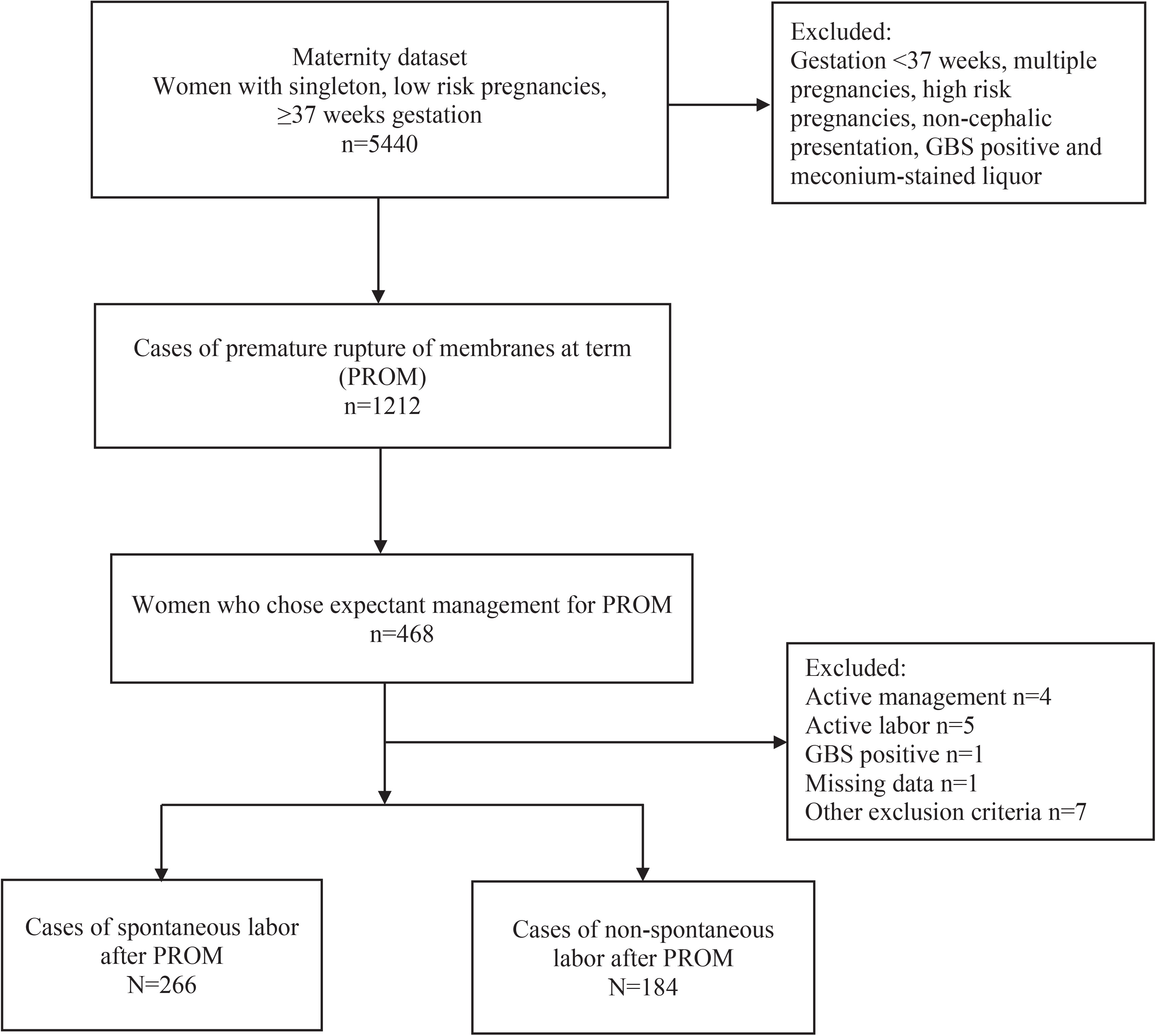
A descriptive analysis was conducted by calculating the most appropriate measures of central tendency and dispersion according to the characteristics of each variable. In general, for quantitative variables, the mean and standard deviation were used when data followed a normal distribution, while the median and the interquartile range (IQR) were reported for non-normally distributed variables. The normality of continuous variables was assessed using an integrated approach based on: 1) prior knowledge of the nature of the variable and its expected behavior in the study population; 2) visual inspection of histograms and Q-Q plots; and 3) secondary consideration of formal normality tests. The results of the Kolmogorov-Smirnov or Shapiro-Wilk tests were not used as the sole decision criterion, since their interpretation is highly dependent on sample size: they have low power in small samples and excessive sensitivity in large samples, potentially detecting deviations of little practical relevance. Therefore, the final assessment was based primarily on biological plausibility and graphical inspection of the data. Categorical variables were described using frequencies, percentages, and 95% confidence intervals. Cases with missing data were excluded from the dataset (Figure 1).
Figure 1
Flow chart of cases selection, expectant management of premature rupture of membranes at term and perinatal outcomes, an observational retrospective multi-center study, Hospital de Inca and Hospital de Manacor, Spain, 2017–2019 (N=450)
The Newcombe-Wilson method was used to estimate the absolute difference between proportions and its 95% confidence interval. Although not a hypothesis test per se, it is considered one of the most accurate methods for estimating differences between proportions. Statistical inference was complemented by two-tailed χ² tests, to assess statistical significance between subgroups. Student’s t-test or the Mann–Whitney U test was applied for continuous variables, and the chi-squared test was used for categorical variables, employing Newcombe’s hybrid method for comparisons.
Multivariate logistic regression techniques were applied to examine the presence or absence of complications, adjusting for multiple variables. With the available cases, it was not possible to develop a robust predictive model for neonatal complications. The main objective of the multivariable analysis was to evaluate whether the observed association between the time elapsed from rupture of membranes to delivery and the occurrence of neonatal complications persisted after adjustment for other clinically relevant variables. The objective of the model was estimation rather than prediction.
Correlations between quantitative variables were calculated using Pearson’s correlation coefficient (r) or Spearman’s rank correlation coefficient (rho), depending on the characteristics of the variables. A two-sided significance level of 0.05 was used for all statistical analyses. However, the main emphasis of the analysis was placed on effect size estimation and 95% confidence intervals rather than on statistical significance alone. Regarding missing data, the variables required for the primary outcome analysis were complete, and no missing data were present for the main outcome measures. Consequently, no imputation procedures were performed. When occasional missing values were identified in secondary variables, analyses were conducted using available-case data, and the number of observations included in each analysis is reported where appropriate. All hypothesis tests were done at the 5% significance level. Data were analyzed using Microsoft Excel® and IBM® SPSS® Statistics version 22.
RESULTS
During the study period, a total of 5440 deliveries took place, with 2582 occurring at HCIN and 2858 at HCMN. A total of 1212 term pregnancies were complicated by PROM, representing 13.78% (n=356) at HCIN and 29.95% (n=856) at HCMN. Among these cases, 450 women consented to undergo expectant management – 54.2% (n=244) at HCIN and 45.7% (n=206) at HCMN – accounting for 68.5% of PROM cases at HCIN and 24.1% at HCMN. The number of neonates included in the study was 450, of whom 9.1% (n=41) experienced complications. The characteristics of the pregnant women included in the study are presented in Table 1.
Table 1
Maternal characteristics and delivery mode, an observational retrospective multi-center study, Hospital de Inca and Hospital de Manacor, Spain, 2017–2019 (N=450)
Among the women who underwent expectant management, 50% (n=225) commenced active labor within 8 hours. Furthermore, 86.1% of the sample (n=337) experienced spontaneous onset of labor within 24 hours of PROM, without requiring any medical intervention (Table 2).
Table 2
Spontaneous onset of labor after PROM, an observational retrospective multi-center study, Hospital de Inca and Hospital de Manacor, Spain, 2017-2019 (N=450)
A total of 40.87% of women (n=184) who initially opted for expectant management required active management due to failure to initiate spontaneous labor. Notably, among the women who did not enter labor spontaneously, 9.2% (n=17) had a history of previous cesarean section (SC). In comparison, among those who experienced spontaneous labor onset, 7.5% (n=20) had a previous SC (p=0.514).
The rate of spontaneous vaginal delivery was 81.2% (n=216) in the expectant management cohort, compared to 58.8% (n=107) in the active management cohort. The proportion of women who underwent expectant management and required instrumental delivery was lower than that of women managed actively (12.4% vs 24.1%, respectively). Similarly, the SC rate was also lower among women in the expectant management group (6.4% vs 17%, respectively) (Supplementary file Table 3).
No statistically significant associations were observed between potential covariates, such as maternal age, gestational age, and time elapsed since premature rupture of membranes, and the onset of spontaneous labor, despite comparable baseline characteristics across both centers. The presence of a previous cesarean section was not associated with a higher rate of maternal and neonatal complications.
Maternal complications
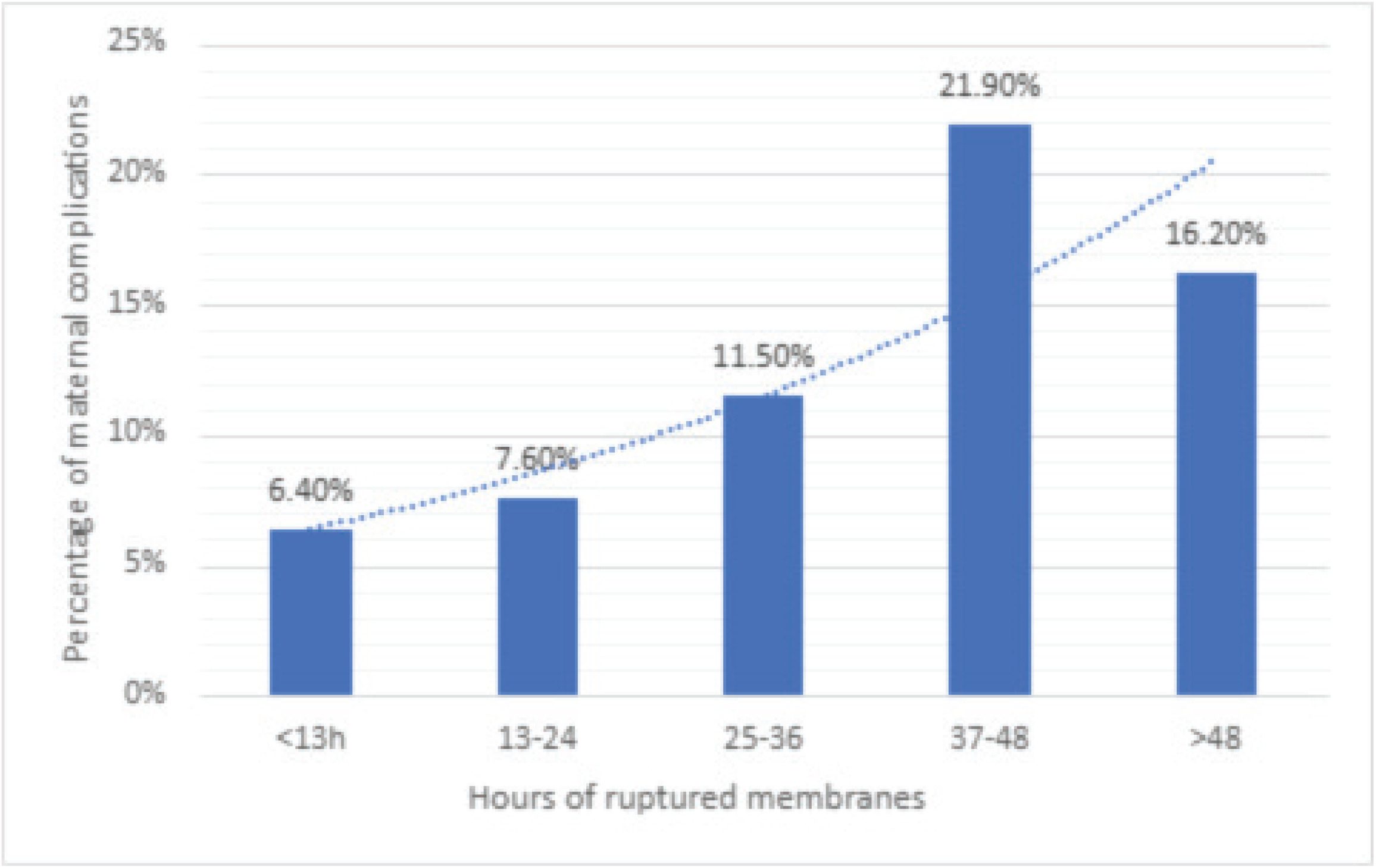
Regarding maternal complications, in the spontaneous labor group, 8.3% of women (n=22) experienced complications, compared to 17% (n=31) in the non-spontaneous labor group (Table 3). A statistically significant difference was found between the two groups (p=0.007), with a relative risk increase of maternal complications (Table 3). No differences were found between the two hospitals under study (p=0.34 and p=0.95, respectively). An increase in maternal complications was also noted as the duration of ruptured membranes increased, with a more marked effect after 24 hours. A moderate positive correlation was observed (r=0.79) (Figure 2).
Table 3
Prevalence of maternal complications, an observational retrospective multi-center study, Hospital de Inca and Hospital de Manacor, Spain, 2017–2019 (N=450)
| Hospital setting | Maternal complications | |||
|---|---|---|---|---|
| Non-spontaneous labor % (n) | Spontaneous labor % (n) | RR* (95% CI) | p | |
| HCIN | 17.50 (14) | 6.70 (11) | 2.61 (1.24–5.49) | 0.996 |
| HCMN | 16.70 (17) | 10.80 (11) | 1.52 (0.75–3.08) | 0.345 |
| Total | 17.00 (31) | 8.30 (22) | 2.06 (1.23–3.44) | 0.007 |
Maternal complications: presence of one or more maternal adverse outcomes, including clinical chorioamnionitis, postpartum endometritis, maternal sepsis, placental abruption, postpartum hemorrhage or maternal death. Spontaneous labor: natural labor onset without intervention after PROM. Non-spontaneous labor: induced labor with medication after PROM.
Figure 2
Percentage of maternal complications according to hours of ruptured membranes, an observational retrospective multi-center study, Hospital de Inca and Hospital de Manacor, Spain, 2017–2019 (N=450)
The most frequent maternal complications were intrapartum fever (7.1%, n=32), postpartum hemorrhage (3.1%, n=14), postpartum fever (1.3%, n=6), maternal readmission within 10 days postpartum (0.7%, n=3), and clinical chorioamnionitis (0.2%, n=1). Intrapartum fever was associated with longer labor duration and the use of epidural analgesia (96.9%, n=31). Regarding postpartum fever, an infectious origin was dismissed in all cases, and antibiotic treatment was not required. Paracetamol alone was sufficient for symptom control. When comparing maternal complications between the two centers, no statistically significant differences were observed (HCMN 13.6% vs HCIN 10.2%; p=0.34).
Neonatal complications
In our study, 7.1% (n=19) of the newborns whose mothers underwent expectant management experienced complications, compared to 12.1% (n=22) of those born following active management (RR=1.69; 95% CI: 0.94–3.04) (Table 4). More neonatal complications were observed in newborns delivered after labor induction (active management) using mechanical and/or pharmacological agents, although this difference is not statistically significant.
Table 4
Prevalence of neonatal complications whose mothers underwent expectant management, an observational retrospective multi-center study, Hospital de Inca and Hospital de Manacor, Spain, 2017–2019 (N=450)
| Hospital setting | Non-spontaneous labor % (n) | Spontaneous labor % (n) | RR* (95% CI) | p |
|---|---|---|---|---|
| HCIN | 8.80 (7) | 3.70 (6) | 2.73 (0.82–6.79) | 0.320 |
| HCIM | 14.70 (15) | 12.70 (13) | 1.15 (0.58–2.29) | 0.011 |
| Total | 12.10 (22) | 7.10 (19) | 1.69 (0.94–3.04) | 0.106 |
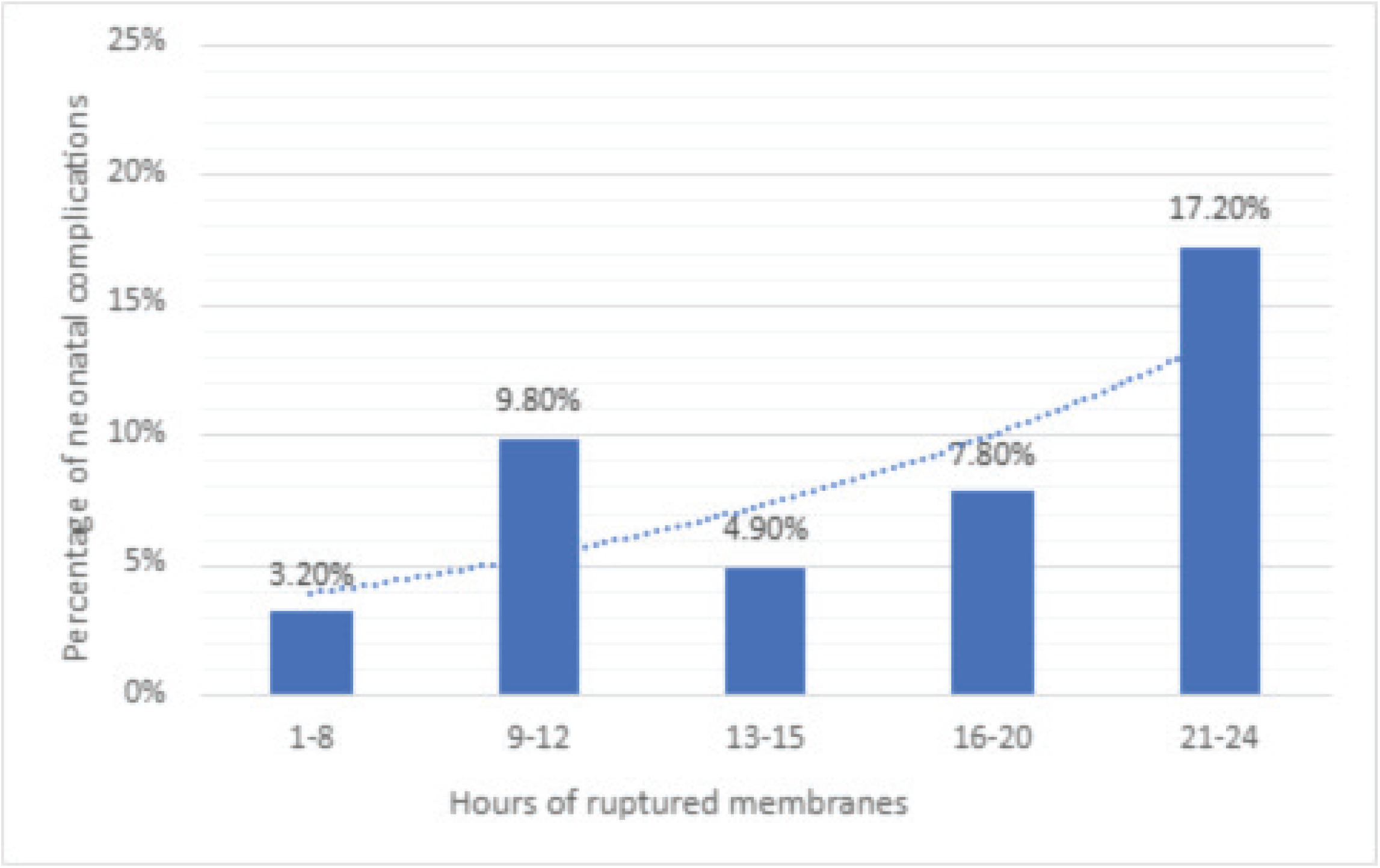
It is worth noting that our study identified an increased risk of neonatal complications as the duration of ruptured membranes progressed, with an OR=1.019 per hour (95% CI: 1.002–1.037; p=0.027), adjusted for the variable spontaneous labor which did not show a significant effect on neonatal complications (OR=1.02; 95% CI: 0.451–2.346; p=0.947) (Table 5). Neonatal complications were observed primarily after 24 hours of membrane rupture, with a coefficient of determination of R²=0.55 (Figure 3).
Table 5
Increase in risk of neonatal complications as the duration of ruptured membranes progressed, an observational retrospective multi-center study, Hospital de Inca and Hospital de Manacor, Spain, 2017-2019 (N=450)
| OR (per hour) | 95% CI | p | ||
|---|---|---|---|---|
| Lower | Upper | |||
| Duration of ruptured membranes (hours) | 1.019 | 1.002 | 1.037 | 0.027 |
| Adjusted for spontaneous labor | 1.028 | 0.451 | 2.346 | 0.947 |
[i] Several clinically plausible covariates were explored in a multivariable logistic regression model (maternal age, gestational age, spontaneous labor). None showed evidence of an independent association with complications, and adjustment for these variables did not meaningfully alter the estimated association between time from membrane rupture to delivery and the outcome.
Figure 3
Percentage of neonatal complications according to hours of ruptured membranes, an observational retrospective multi-center study, Hospital de Inca and Hospital de Manacor, Spain, 2017–2019 (N=450)
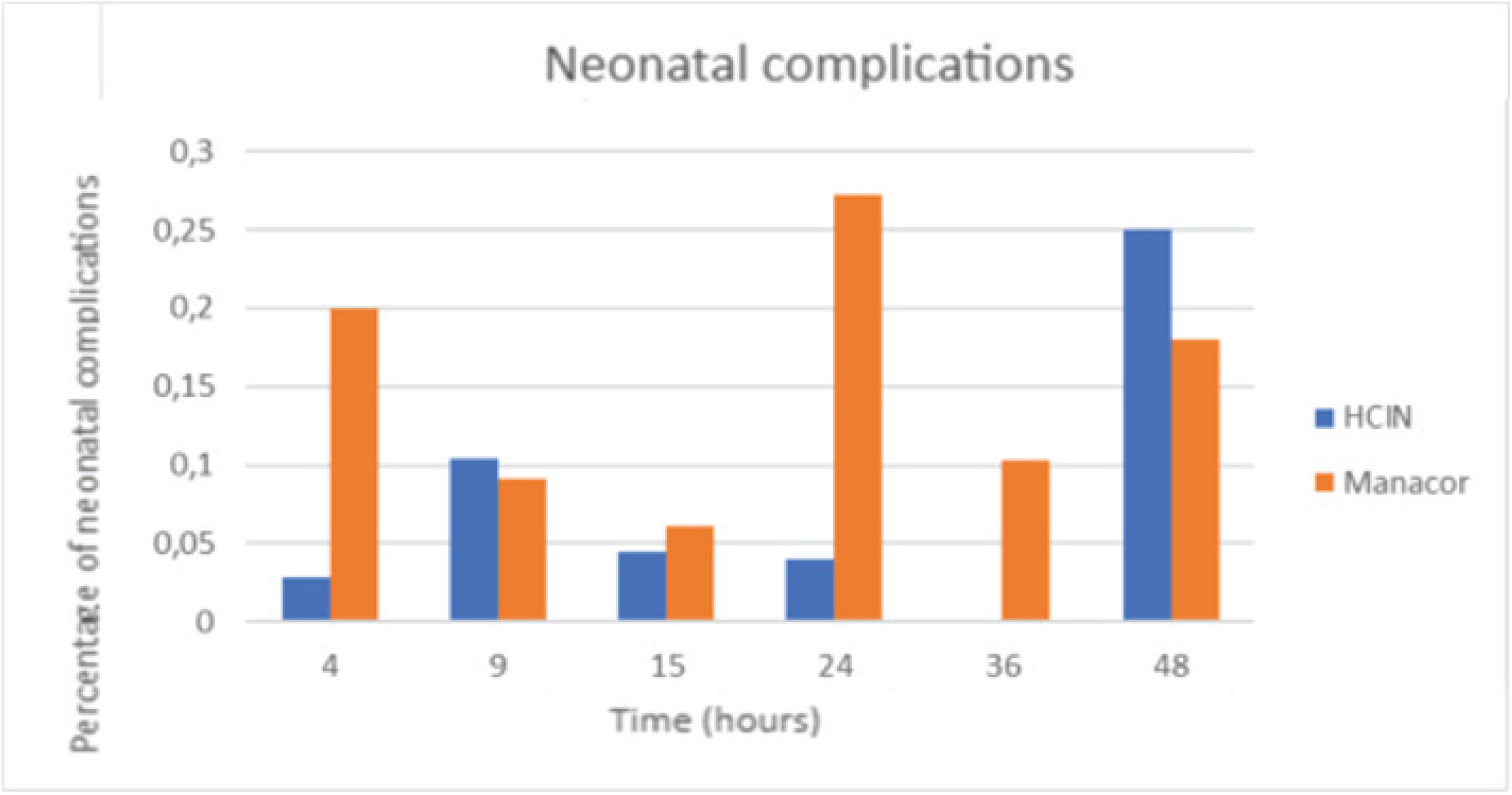
Regarding the incidence of neonatal complications by hospital, statistically significant differences were observed: HCMN reported a rate of 13.6% (n=28 of 206), while HCIN reported 5.3% (n=13 of 244) (p=0.002). Additionally, at HCMN, neonatal complications reached 27% after 24 hours of PROM (Figure 4). The most frequent cause of neonatal hospital admission at both centers was respiratory distress. Following neonatal discharge, 1.12% (n=5) of newborns were readmitted within 10 days, although none of these readmissions was related to neonatal infection.
Figure 4
Prevalence of neonatal complications after hours of PROM, an observational retrospective multi-center study, Hospital de Inca and Hospital de Manacor, Spain, 2017-2019 (N=450)
Regarding other indicators of neonatal well-being, a correlation was identified between the duration of PROM and Apgar score outcomes. Fifty percent of neonates assessed achieved an Apgar score of 10 at 5 minutes when delivery occurred within the first 22 hours following PROM. Lower Apgar scores, in the range of 7 to 9 at 5 minutes of life, were associated with a longer duration of PROM, with a mean of 56.5 hours (p=0.00). No statistically significant relationship was observed between the duration of PROM and umbilical cord blood pH values obtained immediately after birth. Postpartum pH was routinely collected in both centers following delayed cord clamping (Supplementary file Table 4).
Following hospital discharge, 1.12% (n=5) of newborns at HCMN were readmitted within 10 days. None of the reasons for readmission was attributable to neonatal infection.
DISCUSSION
The present study concluded that within our sample, the risk of maternal and neonatal complications increased as the duration of ruptured membranes progressed. This threshold became evident between 24 and 26 hours after PROM. The prevalence of PROM in this study was 22.2%, which is higher than that reported in the scientific literature, where it is estimated to range between 8% and 10%2,3.
Expectant management after PROM presents a valid option for women seeking low-intervention birth, as most spontaneous labor begins within 24 hours. The Spanish Society of Gynecology and Obstetrics reports that 70% of women with term PROM start labor within 24 hours, while NICE guidelines indicate that over 60% begin active labor within 24 hours and up to 95% within 72 hours12,15.
Previous studies report variable intervals between PROM and delivery. Marcos et al.11 found that 82.8% of women started active labor within 24 hours, whereas Girault et al.16 reported that, even in the absence of cervical progression after 48 hours of expectant management, spontaneous labor occurs in 45% of women. Younger maternal age (<35 years) and a more favorable Bishop score at day 2 were identified as significant predictors of spontaneous labor onset. Nonetheless, as this study was conducted in a tertiary care center, the comparability of its findings with those of our study may be limited due to potential differences in case mix and clinical management. On the other hand, da Graça Krupa et al.17 observed that birth occurred within 24 hours in 44% of women managed expectantly, compared to 73.3% of women induced with misoprostol. However, the sample size included 150 women, which may restrict the generalizability of these findings. Krispin et al.18 reported that 50% of women delivered within 33 hours.
Consistent with the recommendations of the aforementioned clinical guidelines and research studies, the present study demonstrated that among the women who experienced spontaneous labor onset (59.1%), 86.1% did so within the first 24 hours, and 90% within 36 hours. Therefore, this time frame could be considered a safe threshold for expectant management. However, due to the limited sample size in the present study, further research is warranted to validate this estimation.
In the present study, 40.9% of women underwent labor induction between 24 and 48 hours after PROM. Oxytocin use was associated with higher rates of instrumental delivery and CS compared with expectant management, potentially reflecting reduced physiological readiness for labor and a higher risk of dystocia. Evidence from previous studies remains inconsistent. Sadeh-Mestechkin et al.19 reported higher CS rates with expectant management, whereas Morris et al.20 observed the opposite effect. Notwithstanding, the inclusion of late preterm neonates (34–36+6 weeks) may limit comparability with term populations. Additionally, Abu Shqara et al.21 reported that delaying induction until 24 hours after PROM in women with a previous CS was associated with lower rates of both labor induction and CS. However, the lack of information on cervical status at the time of the previous CS represents a limitation, as it may have influenced the results.
When expectant management is chosen, the primary concern among healthcare professionals is the risk of maternal and neonatal infection3,22. Although in most cases the etiology of infection is multifactorial23, several studies have linked the duration between PROM and delivery with an increased risk of feto-maternal sepsis23-27. In the present study, more women experienced complications in the labor induction group 17% (n=31) compared with the expectant management group 8.3% (n=22). Contrary to these findings, Morris et al.20 reported that women who underwent expectant management had a higher risk of antepartum or intrapartum hemorrhage, as well as intrapartum fever. It should also be noted that 75% of women undergoing expectant management were managed in the hospital setting, whereas the remainder were followed at home, which may have contributed to differences in the observed outcomes. Similarly, Sadeh-Mestechkin et al.19 observed a higher rate of postpartum maternal hospitalizations due to complications in the expectant management group, lasting up to 48 hours after PROM, compared to those who underwent induction. Among the complications observed, 9.1% of cases were attributed to chorioamnionitis. Nonetheless, high-risk women with chronic hypertension and preeclampsia, and gestational diabetes, were included. Likewise, Hagen et al.28 reported no significant differences in the rates of chorioamnionitis or endometritis between expectant and active management groups. It is worth noting that the expectant management group included a higher proportion of nulliparous women with less favorable Bishop scores.
In contrast, Grunebaum27 concluded that the risk of maternal infection increased significantly after 24 hours of PROM. Middleton et al.10 reported a reduction in the incidence of chorioamnionitis in the induction group compared to women managed expectantly, along with a decreased risk of postpartum sepsis. Similarly, Bellussi et al.22 indicated that labor induction within the first 12 hours after PROM was associated with a lower incidence of chorioamnionitis and endometritis. Melamed et al.3 also found that active management was associated with reduced maternal risk when labor was induced between 15 and 20 hours following PROM. Conversely, Gluck et al.29 concluded that expectant management increased the likelihood of achieving a physiological birth and reduced the risk of chorioamnionitis, owing to the observed correlation between routine vaginal examinations – more frequent among induced women – and febrile morbidity during labor.
Ramirez-Montesinos et al.30 conducted a systematic review of 27 randomized controlled trials (RCTs) and 5 observational studies. The authors identified a gap in the literature concerning the limited number of studies focused specifically on expectant management, as well as a need for strategies to reduce the number of vaginal examinations during labor. In our study, 7.1% of neonates whose mothers opted for expectant management experienced complications, compared to 12.1% of neonates born following active management. Additionally, 50% of the neonates in the expectant management group showed no adverse events within the first 24 hours after PROM. In contrast, Morris et al.20 reported that active management did not reduce the incidence of neonatal sepsis and was associated with an increased rate of respiratory infections. However, the inclusion of women between 34 and 36 weeks’ gestation limits the external validity of these findings when applied to term PROM populations.
Consistent with these findings, Bellussi et al.22 reported that labor induction within the first 12 hours after PROM was associated with lower rates of neonatal sepsis and reduced admissions to Neonatal Intensive Care Units (NICU). However, the comparability of latency intervals between PROM and delivery across study groups was not clearly reported, which may limit the interpretation of these results.
Furthermore, Melamed et al.3 showed that active management within 15–20 hours of PROM was associated with a reduction in neonatal risk compared with expectant management, without an increase in cesarean section rates. Nonetheless, several methodological considerations should be noted. The inclusion of women colonized with group B streptococcus may have influenced the baseline risk of neonatal infection. In addition, although the original allocation to induction or expectant management was randomized, a proportion of women underwent earlier intervention due to maternal or fetal indications, introducing potential bias. Moreover, cervical dilatation was not accounted for as a confounding variable, which may have further influenced the observed outcomes.
Among the neonatal complications associated with expectant management, in addition to infections, were respiratory and neurological problems, intraventricular hemorrhage, and necrotizing enterocolitis11.
Myranek et al.31 evaluated the risk of perinatal death and cerebral palsy in relation to the time interval between PROM and delivery. No association was found between PROM lasting more than 24 hours and the rate of perinatal neonatal mortality, while fetal mortality was actually lower in cases of PROM exceeding 24 hours. Among neonates born between 12 and 24 hours after PROM, 0.11% developed cerebral palsy, compared to 0.15% of those born more than 24 hours post-PROM. No cases of intrapartum fetal death were observed. Moreover, in our study, newborns delivered within 22 hours of PROM achieved an Apgar score of 10, whereas scores decreased progressively as the duration of membrane rupture increased, with a mean of 56.5 hours observed in the lowest scoring cases. No significant association was found between the duration of membrane rupture and umbilical cord pH, possibly due to the delayed collection of samples following late cord clamping (> 3 minutes), which may have affected the validity of this measurement. In line with our findings, Hagen et al.28 found no significant differences in NICU admission rates or Apgar scores between expectant management groups. This study, similar to our research, carried out expectant management at home and in hospital, with 53.3% of women managed at home and 36.3% treated in hospital. Women in the inpatient expectant management group could have been potentially affected by monitoring intensity, which could have impacted clinical outcomes. Furthermore, this study included women who were group B streptococcus (GBS) positive and received intravenous antibiotic prophylaxis after 12 hours of PROM, in contrast to other protocols in which antibiotics are initiated after 24 hours. These variations in care setting and timing of antibiotic administration may have acted as confounding factors, potentially influencing neonatal outcomes and limiting the comparability of results across studies.
Moreover, Jiménez Castellanos32 observed that 39.02% of newborns had an arterial pH below 7.20. Among these, 36.42% had experienced more than 24 hours of ruptured membranes, while 40.11% had less than 24 hours. No significant differences between the two groups were identified, suggesting that the duration of membrane rupture was not correlated with fetal arterial pH in this sample. Additionally, chorioamnionitis, with or without funisitis, does not appear to alter umbilical cord pH or base excess33.
Strengths and limitations
The main strength of this study lies in its ability to evaluate expectant management outcomes within specific time intervals that have not been previously explored in the literature.
On the other hand, the main limitation lies in its retrospective design, as well as in the inherent constraints of manual data collection from physical medical records in the absence of digital records. Although manual data extraction may be associated with potential limitations, several measures were implemented to ensure data quality and reliability. Specifically, all records were systematically and thoroughly examined by trained researchers, following predefined criteria and standardized data collection protocols. Only cases that fully met the inclusion criteria were retained in the final analysis. Records were excluded if they presented conditions that could introduce bias or affect the homogeneity of the study population, such as gestational age below 37 weeks or the presence of Group B streptococcus (GBS) positivity, among others. This rigorous selection process minimized misclassification and ensured consistency across the dataset.
We conducted an observational study in which PROM management was not allocated at random. This non-randomized allocation may have introduced selection bias; women who choose expectant management may differ systematically from those who opt for active management, which could have also influenced maternal and neonatal outcomes. Therefore, the observed associations should not be interpreted as causal effects. Moreover, residual confounding from unmeasured variables cannot be excluded. Regarding the two hospitals included in this study, although both settings are comparable in terms of women’s risk profile and provision of high-risk maternity services, differences in protocols could also manifest in different clinical practices. One example is the administration of neonatal antibiotics for PROM management at term. At HCIN, antibiotics are administered from 24 h post PROM, while at HCMN antibiotics are only administered if infection is suspected.
Another limitation is the method used to diagnose chorioamnionitis, which was based on clinical assessment rather than on diagnostic testing, such as placental culture. However, clinical diagnosis remains a standard and widely accepted practice in most delivery wards across Spain. Additionally, there is a lack of consensus regarding the definition of neonatal infection, which may lead to discrepancies among neonatologists. Although each case of neonatal admission included in this study was reviewed in collaboration with a hospital pediatrician, variation across pediatricians’ practice may exist with the potential for measurement bias.
The study also observed that 27% of neonates experienced an increase in complications after 24 hours of PROM at HCMN. However, the assessment of these outcomes was beyond the scope of the present study. The most plausible explanation for this finding is the difference in clinical practice between the two hospitals – specifically, that HCMN allows for expectant management beyond 24 hours, unlike HCIN. Moreover, the present study did not account for the number of vaginal examinations performed following PROM, a factor that could potentially contribute to an increased risk of infection. Future research should therefore investigate the impact of vaginal examinations after PROM on perinatal outcomes. Finally, the degree of maternal satisfaction among those who opted for expectant management could not be evaluated. Further studies should explore the perspectives and experiences of women who choose this approach. Given the retrospective design of the study, the potential influence of unmeasured confounding variables cannot be excluded34.
In view of these limitations, caution should be taken when generalizing the results obtained in this study. Although our findings may inform practice in similar maternity settings, it is important to consider local protocols and practices and how they may influence maternal and neonatal outcomes as a result of variations in the management of PROM at term.
CONCLUSIONS
The present study demonstrated that the risk of both maternal and neonatal complications increased as the duration of ruptured membranes progressed within our sample. Nevertheless, spontaneous onset of labor following PROM conferred beneficial effects for women in the expectant management group. Further research is necessary to determine whether a new safe threshold for expectant management could be established between 24 and 36 hours.

